
AD Operations
F is for Feedstock, FOS/TAC and Flow Rate Precision
A technical guide to managing feedstock portfolios, FOS/TAC ratios and flow rate precision in anaerobic digestion facilities, and how the three work together to secure stability, resilience and maximum yield.
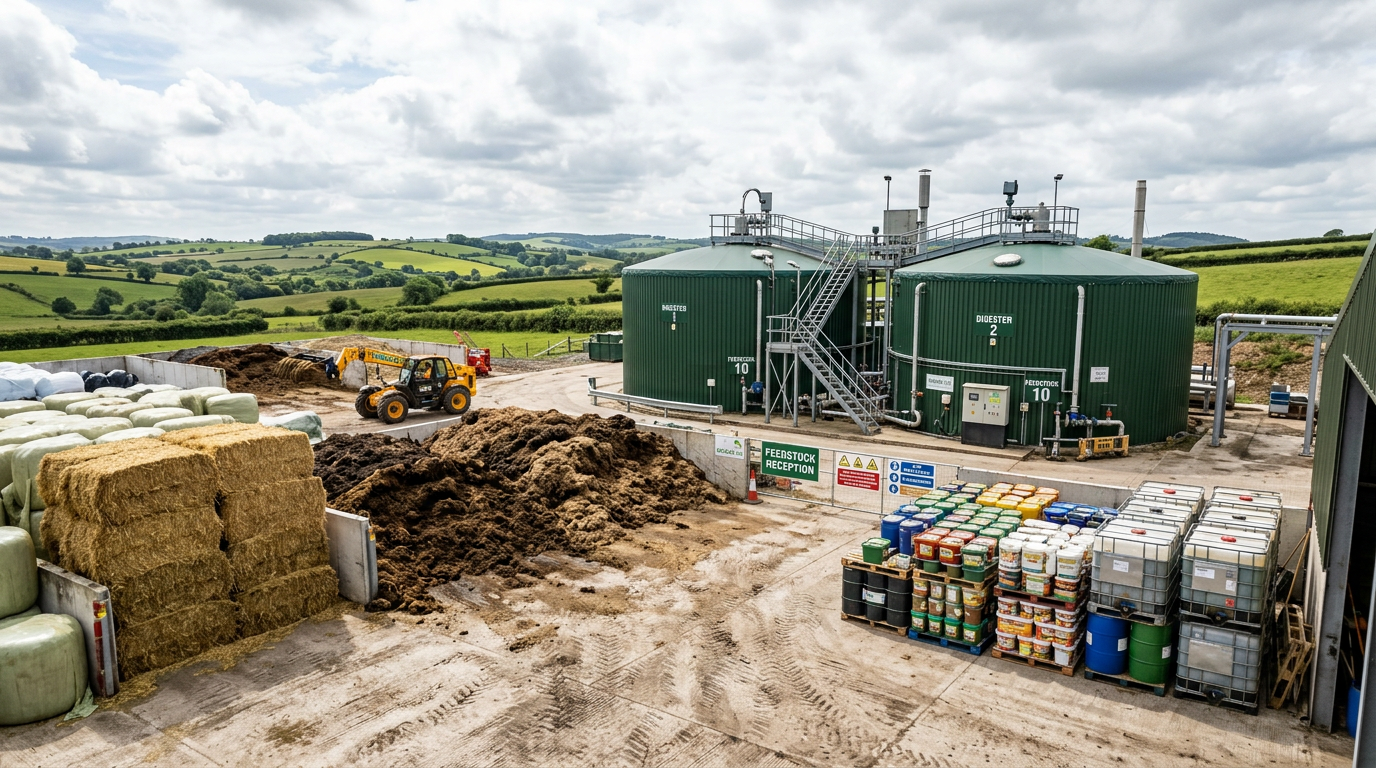
As our A-Z of Anaerobic Digestion continues, we reach the letter F, and with it three of the disciplines that define day-to-day operational excellence: Feedstock, FOS/TAC and Flow Rate. Following on from our look at Emissions, Energy Efficiency, Economics and Environmental Permitting, this entry moves back inside the digester to the biological and operational levers that determine whether a plant runs smoothly or lurches from one upset to the next.
While the engineering of a plant provides the framework, the daily operational heavy lifting is where real value is either secured or lost. A well-designed facility fed carelessly will underperform, whereas an ordinary plant managed with discipline can deliver consistently strong results. At TIFT Services Ltd, we help operators bring the same rigour to these three fundamentals that they bring to capital investment decisions.
Feedstock: The Biological Foundation
The performance of an anaerobic digester is inextricably linked to the quality and consistency of its input. Feedstock is the single most significant factor in determining gas production, process stability and, ultimately, commercial return. Every other operational parameter, from loading rate to mixing regime, is effectively a response to what is being fed into the tank.
The Portfolio Approach to Substrates
We advocate a balanced feedstock portfolio that weighs economic value against biological risk. Relying on a single source increases exposure to nutritional deficiencies, sudden chemical shocks and supply interruption. A blended diet, by contrast, tends to smooth out variability, provides a broader spread of nutrients and trace elements, and reduces the commercial leverage held by any one supplier.
The trade-off is that a diverse portfolio demands more careful management. Each new substrate changes the biological balance of the digester, so introductions should be gradual and monitored rather than abrupt. Blending should always be considered alongside permit constraints, Animal By-Product (ABP) obligations and the effect on digestate quality further down the line.
Substrate Characteristics and C:N Ratios
A target Carbon-to-Nitrogen (C:N) ratio of approximately 20:1 to 30:1 is generally optimal for mixed-feed digesters. Straying too far in either direction undermines the microbial community that drives methanogenesis:
- Low C:N ratio: an excess of nitrogen leads to ammonia accumulation. At elevated concentrations, free ammonia is directly inhibitory to methanogens, suppressing gas production and, in severe cases, triggering a stubborn "inhibited steady state" where the plant runs but never performs.
- High C:N ratio: carbon-heavy substrates degrade slowly and can leave nitrogen in short supply for microbial growth, reducing biogas yield unless the feed is balanced with a more nitrogen-rich co-substrate.
Balancing the C:N ratio across the portfolio is therefore one of the most effective ways to protect both yield and stability. It is also a decision best made deliberately at the planning stage rather than reactively once a problem appears in the tank.
FOS/TAC: The Primary Early Warning System
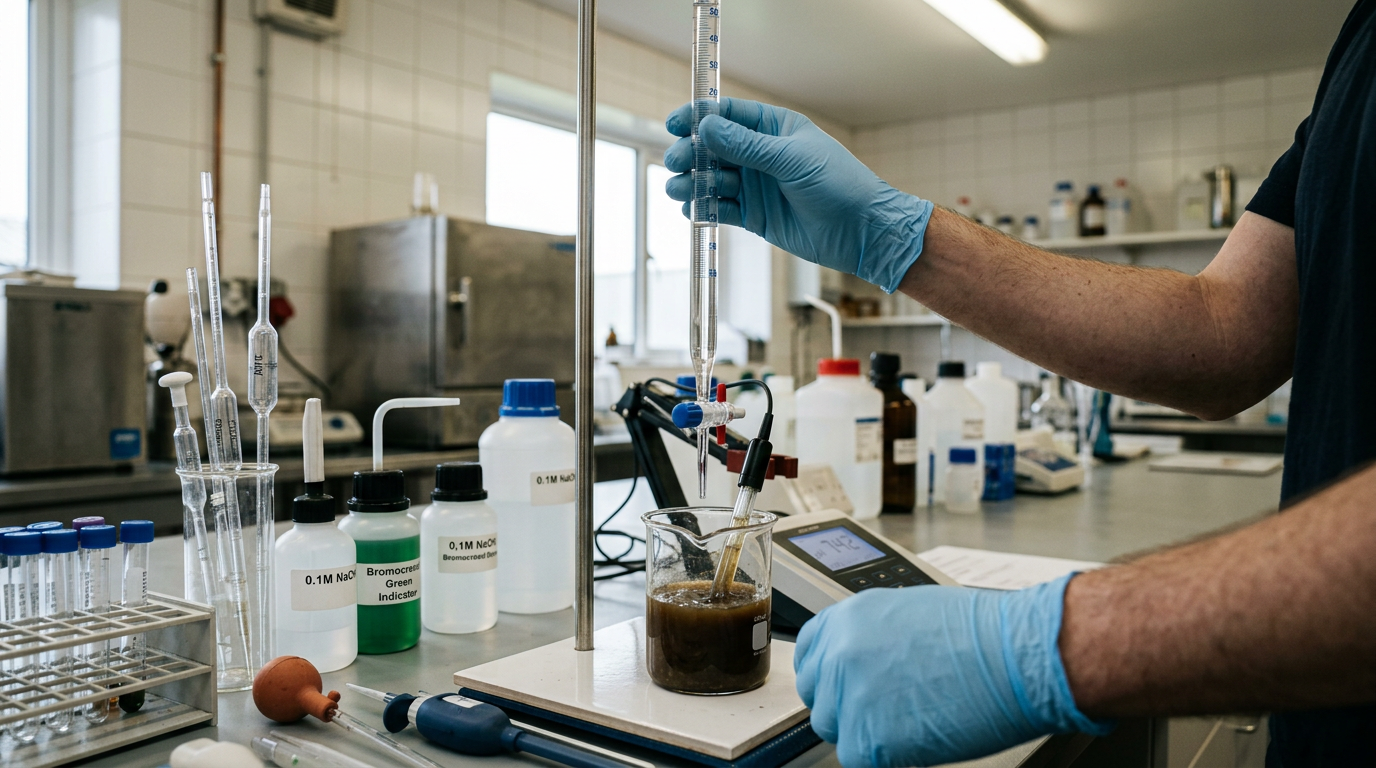
The FOS/TAC ratio is one of the most valuable routine measurements available to an AD operator. Determined by titration, it compares the concentration of volatile fatty acids (FOS) against the total inorganic carbonate buffering, or alkalinity (TAC). Because acids accumulate before pH visibly falls, the ratio allows operators to detect biological stress well ahead of a pH crash, when there is still time to act.
Interpreting the Ratio
The following bands are a widely used guide for a stable, well-buffered digester. They should be treated as indicative rather than absolute:
- Below 0.3: conservative and strongly buffered. This is comfortable, but a persistently low value can also indicate that the plant is being under-fed and has spare capacity that is not being used.
- 0.3 to 0.4: the typical healthy operating window for many plants. Acids and buffering are in balance, and this is where a well-managed digester often sits.
- 0.4 to 0.6: rising stress. Volatile fatty acids are beginning to outpace conversion. Increase monitoring frequency and consider reducing the organic loading rate by 10 to 20 per cent.
- Above 0.6: buffering capacity is failing. Halt or sharply cut feeding, investigate the cause, and consider emergency alkalinity dosing to arrest the decline before pH collapses.
Important caveat: FOS/TAC is a titration-based ratio (the Nordmann method), and absolute values are sensitive to the exact method, end-points and equipment used by each laboratory. The numbers above are a general guide, not a universal law. The single most useful practice is to establish your own plant's baseline and trend the ratio over time, rather than chasing an absolute figure from a textbook.
Flow Rate: Precision in Control
Precise flow rate management is what translates a sound feedstock strategy into stable operation. Flow rate governs two of the most important process parameters in anaerobic digestion: the Organic Loading Rate (OLR), which is the mass of volatile solids fed per unit of digester volume per day, and the Hydraulic Retention Time (HRT), which is the average time material spends in the tank.

Protecting the Biology From Shock
The microbial community, and the slow-growing methanogens in particular, adapts to change gradually. Sudden increases in loading, or abrupt swings in feedstock, can overwhelm the acid-consuming stage of the process and drive the FOS/TAC ratio upward. As a general rule, changes to loading should be limited to no more than 5 to 10 per cent per day, giving the biology time to adjust.
Managing OLR and HRT together is a balancing act. Push the loading rate too high, or shorten retention time too far, and undigested material can pass through before it is fully converted, wasting yield and destabilising the tank. Run too conservatively, and valuable digester capacity sits idle. Accurate flow measurement, reliable pumps and a control system that logs and trends feed data are what allow an operator to hold this balance with confidence.
Bringing the "F"s Together
Feedstock, FOS/TAC and flow rate are not three separate tasks but a single feedback loop. The feedstock portfolio sets the biological potential and the risks; the FOS/TAC ratio tells you how the digester is coping with what it is being fed; and flow rate is the primary lever you use to respond. Read together and acted on promptly, they keep a plant stable, resilient and productive. Managed in isolation, they are where avoidable upsets begin.
At TIFT Services Ltd, we bring over 15 years of technical expertise to help operators build robust feedstock strategies, establish meaningful monitoring baselines, and fine-tune loading for maximum stable yield. Whether you are commissioning a new plant, troubleshooting an unstable digester, or simply looking to squeeze more consistent performance from an existing site, our mission is to keep your facility stable, efficient and commercially resilient.
Need support with feedstock strategy, process stability or digester troubleshooting?
Contact Our Team More Technical Guides