
AD Operations
G is for Gas Yield, Grid Injection and Gas Upgrading
An in-depth technical analysis of the parameters governing biomethane production, from feedstock gas yield and gas quality specifications to GS(M)R compliance for grid injection and the technologies, costs and strategic choices that turn raw biogas into a premium product.
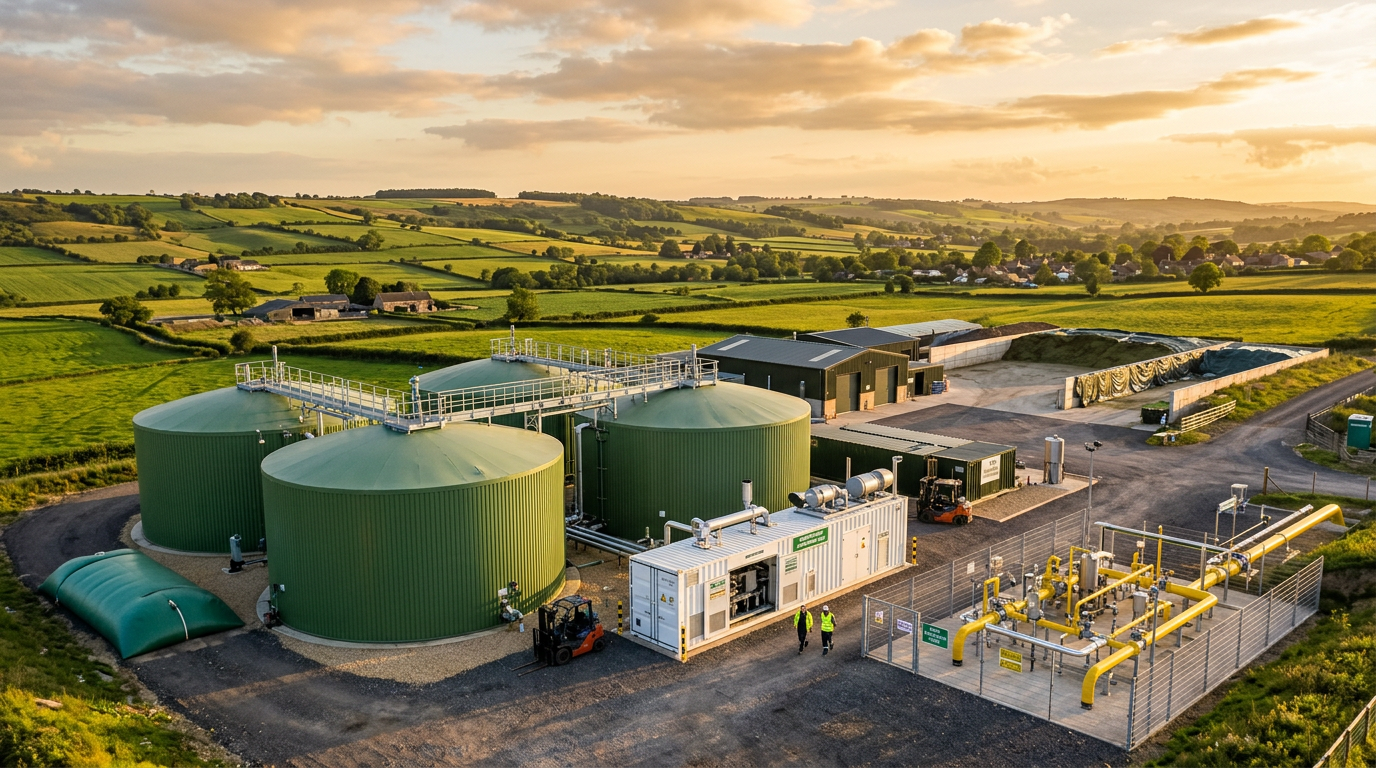
As our A-Z of Anaerobic Digestion series continues, we reach the letter G, and the transition from raw biogas production to premium renewable gas. This is one of the most significant technical and commercial undertakings an AD operator can pursue. In this entry, we examine three critical "G" components: Gas Yield, Grid Injection and Gas Upgrading.
Following on from our look at Feedstock, FOS/TAC and Flow Rate, this entry moves downstream of the digester: from how much gas a plant makes, to how that gas is cleaned, conditioned and delivered to the grid, and to the strategic decision to upgrade raw biogas into a premium product that can reach markets ordinary biogas simply cannot.
Understanding Gas Yield: Feedstock Variance and Energy Potential
Gas yield is the volume of biogas produced per tonne of feedstock (m³/t), and it varies enormously with the nature of the material. It is driven principally by the biochemical methane potential (BMP) and the volatile solids content of the substrate. Understanding these variances is essential both for sizing a plant and for building a realistic revenue forecast.
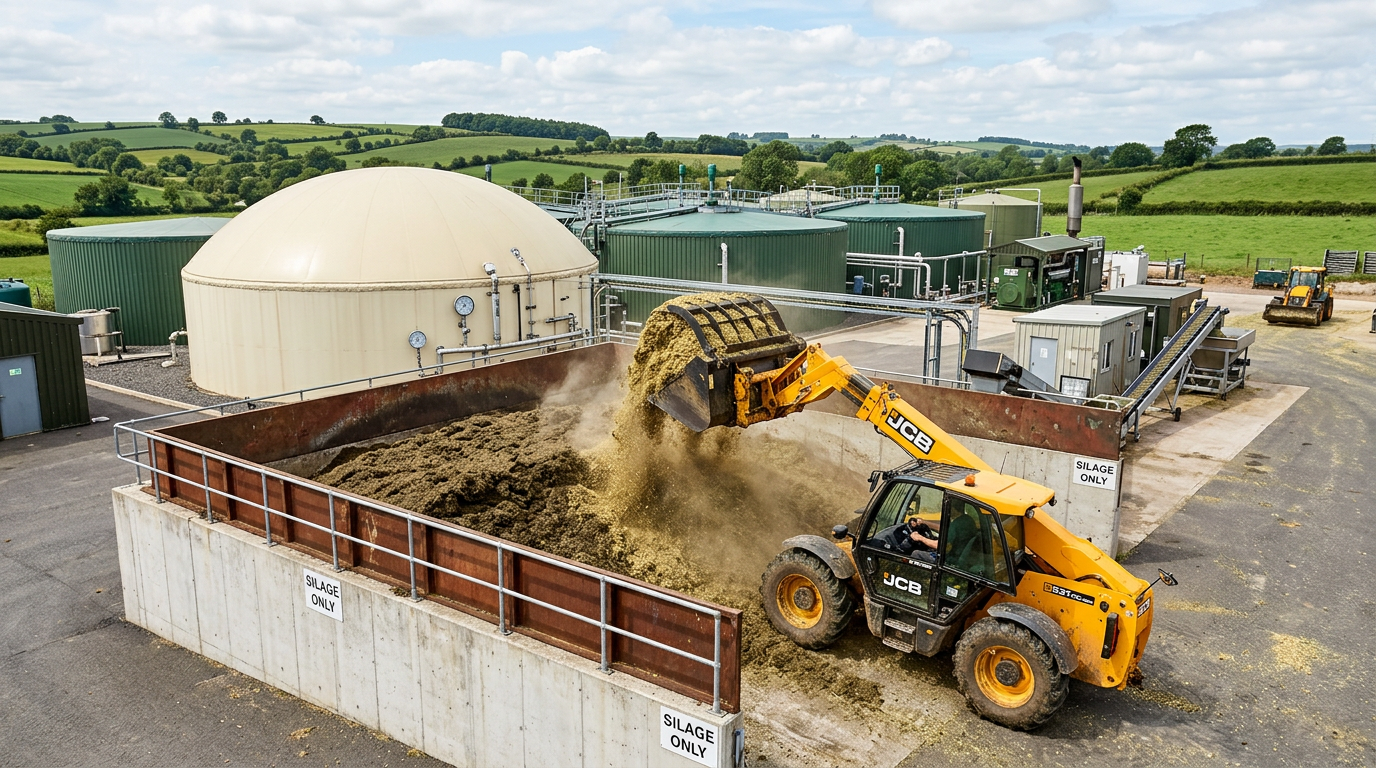
- Agricultural slurries: approximately 15 to 25 m³/t. These offer a lower energy density but bring valuable process nutrients and buffering, making them useful stabilising components of a feedstock blend.
- High-energy crops: approximately 180 to 220 m³/t. Maize silage and hybrid rye provide concentrated, predictable energy, though their use is constrained by feedstock sustainability requirements.
- Food waste and FOGs: source-segregated food waste typically yields in the region of 100 m³/t or more, while pure fats, oils and greases (FOGs) can reach up to around 1,200 m³/t in theoretical terms. FOGs are extremely energy-dense but must be dosed with care to avoid overloading and foaming.
These figures are indicative ranges rather than guarantees. As we explored in our guide to degradation rates, real-world yields depend on retention time, pre-treatment, temperature and process stability, so conservative assumptions are always prudent when translating laboratory potential into a financial model.
Gas Quality and Pre-treatment Requirements
Raw biogas typically consists of 50 to 60 per cent methane (CH₄) and 40 to 50 per cent carbon dioxide (CO₂), together with water vapour and trace contaminants. Before it can be upgraded or injected, it must be conditioned to meet strict quality parameters that protect both the upgrading equipment and the downstream grid assets:
- Moisture removal (dew point control): refrigeration and cooling are used to condense out water vapour, preventing condensation and the formation of corrosive acids further down the process.
- Hydrogen sulphide (H₂S) limits: H₂S is reduced to very low levels, typically below 5 mg/m³, using biological desulphurisation or activated carbon, in order to protect engines, membranes and pipework from corrosion.
Effective upstream cleaning is not merely a compliance step. It directly extends the life of expensive downstream equipment and reduces both maintenance costs and emissions, making it one of the highest-value investments on an upgrading site.
Gas Upgrading: From Biogas to Biomethane
What separates biogas from biomethane? In practical terms, it is around £2 to £4 million of upgrading equipment and a technical gauntlet that separates ordinary producers from premium markets. Raw biogas leaves the digester at roughly 50 to 70 per cent methane, but biomethane must be purified to greater than 97 per cent methane to meet the specification for grid entry. Upgrading is the process that closes that gap by stripping out the carbon dioxide and remaining trace contaminants to concentrate the methane.
This is a significant capital decision, not a bolt-on. None of it is plug and play, and the choice of technology has a lasting effect on both operating cost and the revenue the plant can ultimately reach.
The Main Upgrading Technologies
Three technologies dominate the UK market, and each offers a different balance of methane recovery, energy demand and capital cost. There is no single "best" option; the right choice depends on plant scale, site utilities, gas quality and commercial priorities.
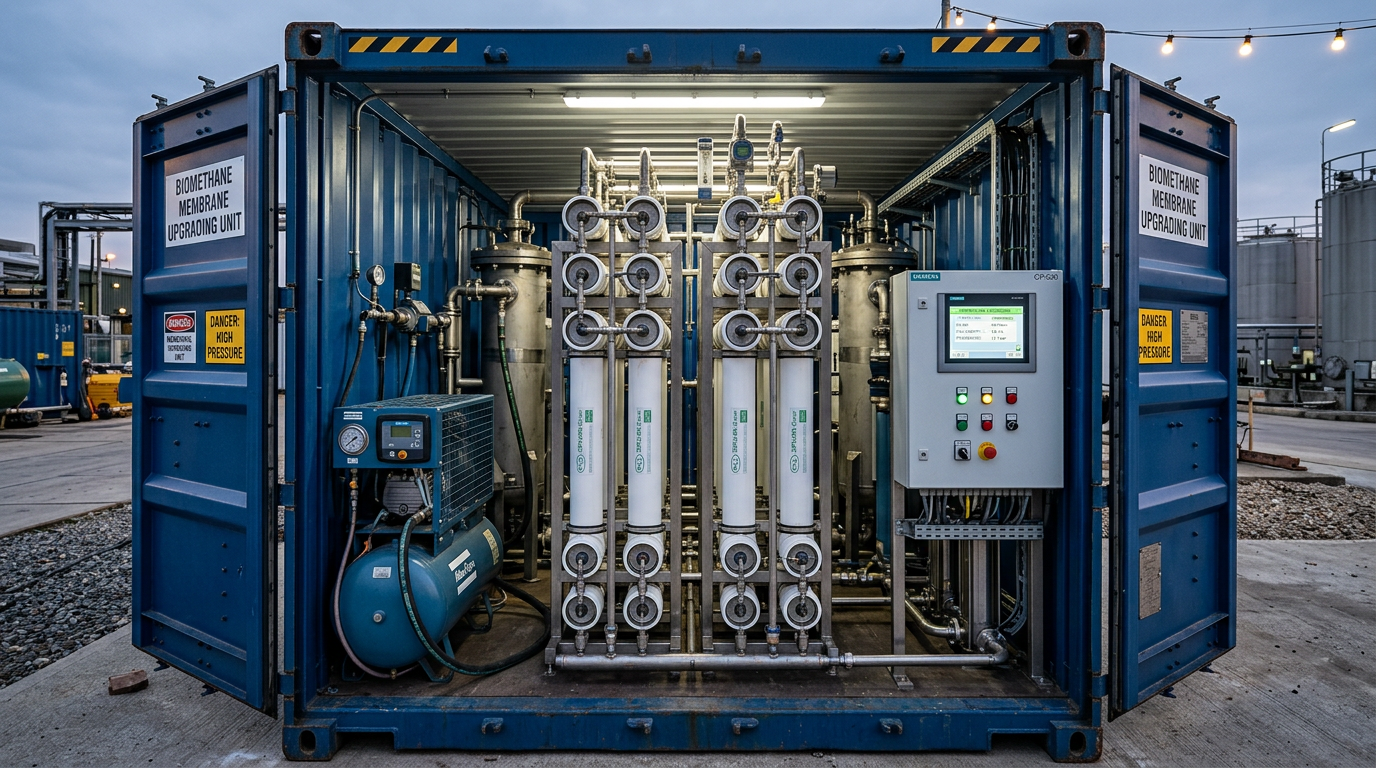
- Membrane separation: uses selectively permeable membranes to separate CO₂ from methane under pressure. It is compact, has no process water or chemical demand, and is well suited to a wide range of plant sizes. Membrane modules are sensitive to temperature and contaminants, so they are always housed within containerised or enclosed units and depend on thorough upstream cleaning to protect the membranes and maintain methane recovery.
- Water scrubbing: exploits the higher solubility of CO₂ in water to wash it out of the gas stream. It is a robust, well-proven technology that tolerates variable gas quality, but it carries a significant water and pumping demand and a correspondingly higher parasitic energy load.
- Pressure swing adsorption (PSA): passes the gas through adsorbent material that captures CO₂ at high pressure and releases it as the pressure is lowered. PSA achieves high methane purity and avoids process water, but it involves more complex cyclic operation and careful management of methane slip.
Each of these routes can purify the gas to a methane content of around 97 to 99 per cent. The trade-offs between recovery rate, energy demand and capital cost are exactly where specialist advice pays for itself, because a decision made at procurement is very difficult and expensive to reverse once the plant is built.
Grid Injection and GS(M)R Compliance
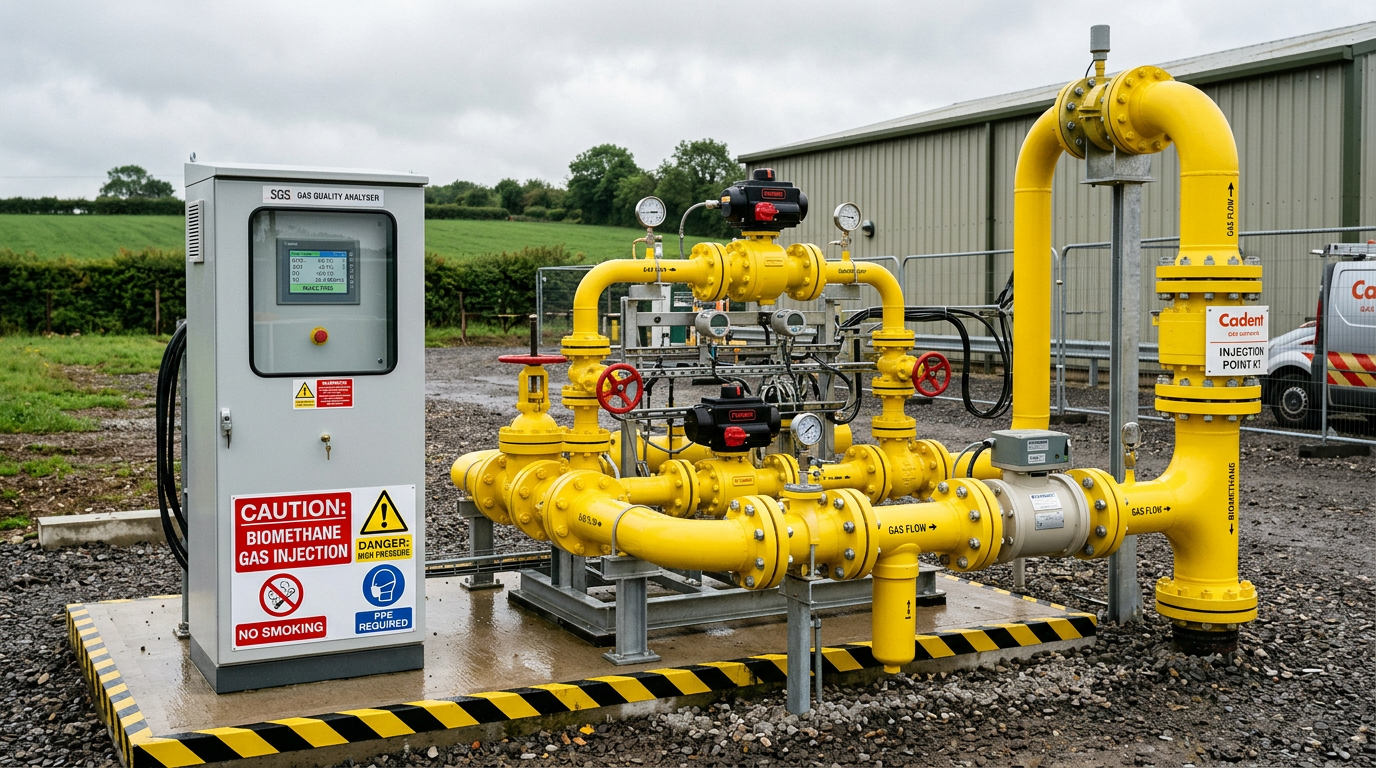
Purifying the gas is only half the task. Injecting it into the network requires strict compliance with the Gas Safety (Management) Regulations, GS(M)R, together with the individual network operator's standards. This is a demanding, real-time compliance environment, and the injection kiosk is where the biomethane is finally conditioned to match the surrounding grid gas.
- Calorific value and propane enrichment: propane is added at the injection kiosk, commonly in the region of 2 to 8 per cent, to raise the calorific value and Wobbe Index so that the biomethane matches the specification of the surrounding grid gas.
- Oxygen limits: a strict limit of below 0.2 per cent molar oxygen applies, to prevent internal corrosion of the pipeline network.
- Real-time gas quality monitoring: continuous gas chromatographs analyse the gas at the point of entry and will automatically shut off injection the instant any off-specification gas is detected, protecting the network at all times.
Beyond the Grid: SAF, Bio-LNG and Optionality
Upgrading is no longer only about the gas grid. Biomethane is increasingly valued as a feedstock for Sustainable Aviation Fuel (SAF) production and as Bio-LNG for heavy transport. It is the same molecule, but with different revenue streams attached, and the market prices for those streams do not always move together.
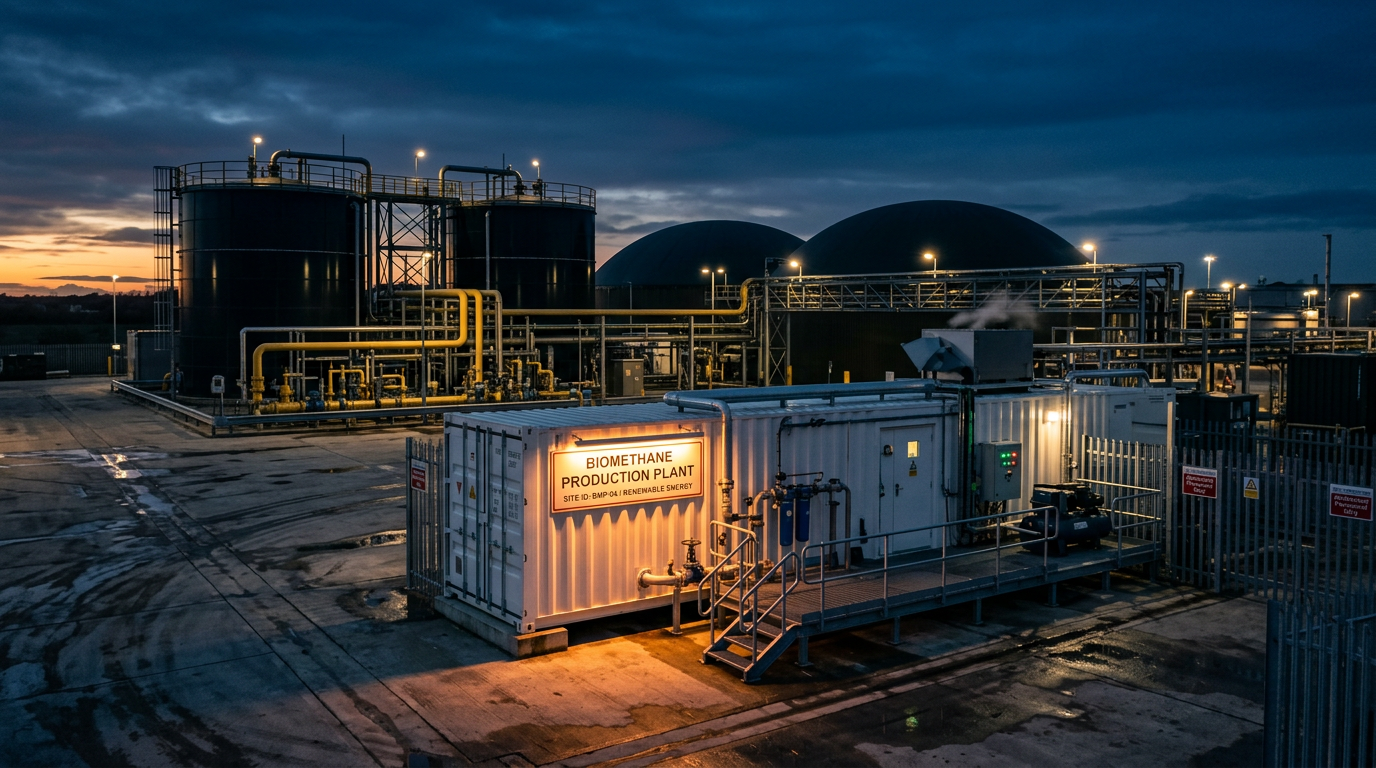
This matters commercially. A plant designed with optionality in mind, rather than being hard-wired to a single offtake, can direct its biomethane towards whichever market pays most at a given time. Building that flexibility in from the outset, whether through liquefaction capability, connection arrangements or contractual structure, is one of the most effective ways to protect a project against shifts in any single market.
The strategic decision to upgrade: upgrading significantly increases capital cost, but it unlocks premium revenues that raw biogas simply cannot reach. The question every operator should be asking is not merely "can we upgrade?" but "what is our gas utilisation strategy?" The answer should weigh capital cost against the range of markets the plant could serve over its lifetime, not just the one available on day one.
Bringing the "G"s Together
Gas yield, grid injection and gas upgrading form a single chain from substrate to premium product. Realistic gas yield assumptions determine how much biomethane a plant can actually produce; the choice of upgrading technology determines the cost and efficiency with which raw biogas is turned into a saleable product; and disciplined grid injection and GS(M)R compliance determine whether that product can be delivered safely and continuously. A weakness at any point in the chain undermines the whole business case.
At TIFT Services Ltd, we bring over 15 years of technical expertise to help operators build credible yield forecasts, select and specify the right upgrading technology, and navigate gas quality and grid injection requirements. Whether you are scoping a new biomethane project, choosing between upgrading routes, or building optionality towards SAF and Bio-LNG markets, our mission is to keep your facility compliant, efficient and commercially resilient.
Need support with biomethane upgrading, grid injection or gas utilisation strategy?
Contact Our Team More Technical Guides