
B is for Basic Biogas, Buffering Capacity and Biomethane Upgrading
Introduction to the A-Z of Anaerobic Digestion
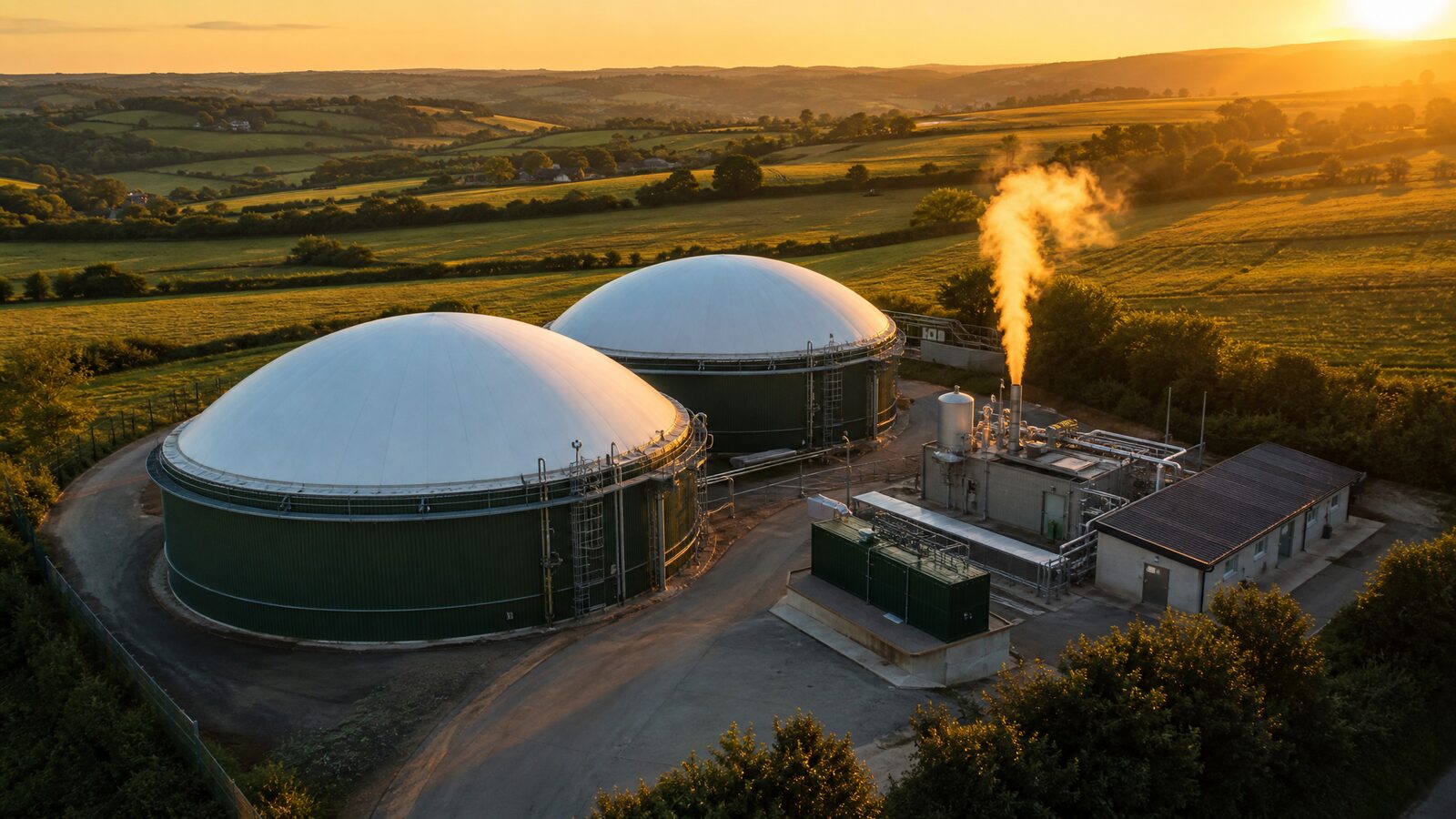
In the second instalment of our technical series, we move to the letter B. Following our look at Anaerobic Digestion and Ammonia, we now focus on the core output of our industry: Biogas. Understanding the transition from raw organic feedstock to high-value biomethane requires a deep dive into the biological basics, the chemical safety nets of buffering capacity, and the industrial precision of gas upgrading.
At TIFT Services Ltd, we specialise in the operational management of these complex systems. Whether you are optimising an existing site or developing a new facility, mastering the "Basics, Buffering, and Biomethane" is essential for long-term commercial and environmental success.
Understanding Biogas Basics
Biogas is the primary product of the anaerobic digestion (AD) process. It is a renewable energy source produced through the biological breakdown of organic matter, such as agricultural residues, food waste, and manure, in the absence of oxygen.
The Composition of Biogas
Raw biogas is not a pure substance; it is a mixture of gases. Typically, it consists of:
Methane (CH₄): 50–75%. This is the energy-carrying component.
Carbon Dioxide (CO₂): 25–50%. A non-combustible byproduct that must be managed or removed.
Trace Gases: Including Hydrogen Sulphide (H₂S), Ammonia (NH₃), Nitrogen (N₂), and Water Vapour.
The exact composition depends heavily on the feedstock used. For example, high-fat substrates such as food processing wastes and used cooking oils often result in a higher methane percentage (up to 70–75%), whereas carbohydrate-rich materials such as fruit and vegetable waste may produce more CO₂ and yield methane concentrations closer to 50–60%. Protein-rich feedstocks can also elevate ammonia concentrations in the biogas, which has implications for both downstream gas cleaning and process biology. Understanding these feedstock-composition relationships is fundamental to predicting gas yields, managing upgrading performance, and sizing gas handling infrastructure appropriately.
The Four Stages of Production
To produce biogas efficiently, the digester must facilitate four distinct biological stages. Each stage is carried out by a different microbial community, and each has its own operational sensitivities. In practice, stable gas production depends less on maximising any single stage and more on keeping these stages in balance across changing feedstock, loading rate, temperature, and mixing conditions.
1. Hydrolysis
Large organic molecules such as carbohydrates, proteins, and lipids are broken down into smaller, soluble compounds including sugars, amino acids, and long-chain fatty acids. This is often the rate-limiting step in AD, particularly where feedstocks are fibrous, lignocellulosic, or poorly macerated. Practical improvement measures include consistent particle size reduction, effective feed preparation, controlled recirculation, and sufficient retention time. Operators should also monitor for floating layers, sediment build-up, and poor mixing, as these can reduce contact between microbes and substrate.
It is worth noting that hydrolysis rate varies enormously by feedstock type. Simple sugars and starches may hydrolyse within hours, whereas lignocellulosic materials such as straw, woody residues, and certain energy crops may resist hydrolysis for weeks unless pre-treated. This has direct implications for hydraulic retention time design and for understanding why certain feedstock blends underperform relative to their theoretical BMP values.
2. Acidogenesis
Fermentative bacteria convert soluble intermediates into volatile fatty acids (VFAs), alcohols, hydrogen, and CO₂. This stage responds quickly to increased feed input, which is why overfeeding often presents first as rising acids rather than an immediate fall in gas output. Practical control measures include gradual feed changes, even feed distribution through the day, and close observation of VFA trends after introducing new substrates. Highly degradable wastes such as bakery waste, confectionery residues, and ice cream wastewater can increase acid production sharply, so blend management and controlled introduction are essential.
A useful operational indicator is the ratio of propionic acid to acetic acid within the VFA profile. When propionic acid begins to rise disproportionately, it often signals that the downstream acetogenic and methanogenic stages are struggling. This early warning can be detected through individual VFA analysis before the overall FOS/TAC ratio begins to move significantly.
3. Acetogenesis
Acetogenic bacteria convert longer-chain VFAs and alcohols into acetic acid, hydrogen, and CO₂, creating the main precursors used by methanogens. This stage is strongly influenced by hydrogen partial pressure. If hydrogen accumulates because methanogens are underperforming, acetogenesis can slow and intermediate acids, particularly propionic and butyric acid, may build up. In operational terms, this means that poor methane conversion can create a bottleneck upstream, resulting in a cascade effect that compounds process instability.
Good mixing, stable temperature, and avoiding toxic shocks all support this stage. The thermodynamic coupling between acetogens and methanogens is one of the most delicate relationships in AD biology, and it explains why recovery from acidification events is often slow: both communities must re-establish equilibrium simultaneously.
4. Methanogenesis
Methanogenic archaea convert acetic acid, hydrogen, and CO₂ into methane and CO₂. This is the most sensitive stage in the process. Methanogens are vulnerable to low pH (below approximately 6.5), ammonia toxicity (free ammonia concentrations above 700–800 mg/L NH₃-N can become inhibitory, though acclimated populations may tolerate higher levels), sulphide inhibition, temperature fluctuation, and rapid changes in loading. Practical site discipline is therefore essential: maintain stable feed timing, avoid sudden process shocks, verify heater and temperature control performance, and investigate declining methane percentage promptly rather than waiting for a major drop in gas volume.
Methanogens also have significantly slower growth rates than the fermentative organisms in the earlier stages, with doubling times measured in days rather than hours. This means that once methanogenic populations are damaged by a pH crash or toxic event, recovery may take weeks or even months, during which time the plant operates at reduced capacity. Prevention is therefore far more cost-effective than cure.
Each of these stages should be considered when diagnosing process instability. For example, a rise in VFAs with steady feed input may indicate weak methanogenesis rather than excessive hydrolysis. Likewise, persistent scum formation may indicate a front-end handling issue that is limiting hydrolysis efficiency, or a fatty acid accumulation problem creating surface films. The most effective operators review biology, mechanics, and feedstock quality together rather than in isolation.
This process is a delicate balance. If one stage moves too quickly, particularly acidogenesis, it can overwhelm the final stage, leading to a "sour" digester. This brings us to the second "B" of our guide: Buffering Capacity.
Managing Stability: Buffering Capacity and the FOS/TAC Ratio
Buffering capacity is the ability of the digester fluid to resist changes in pH. In the world of AD, pH stability is life. If the environment becomes too acidic, the methanogenic archaea will stop functioning, biogas production will plummet, and the entire biological population could be lost, potentially taking weeks or months to re-establish.
What is FOS/TAC?
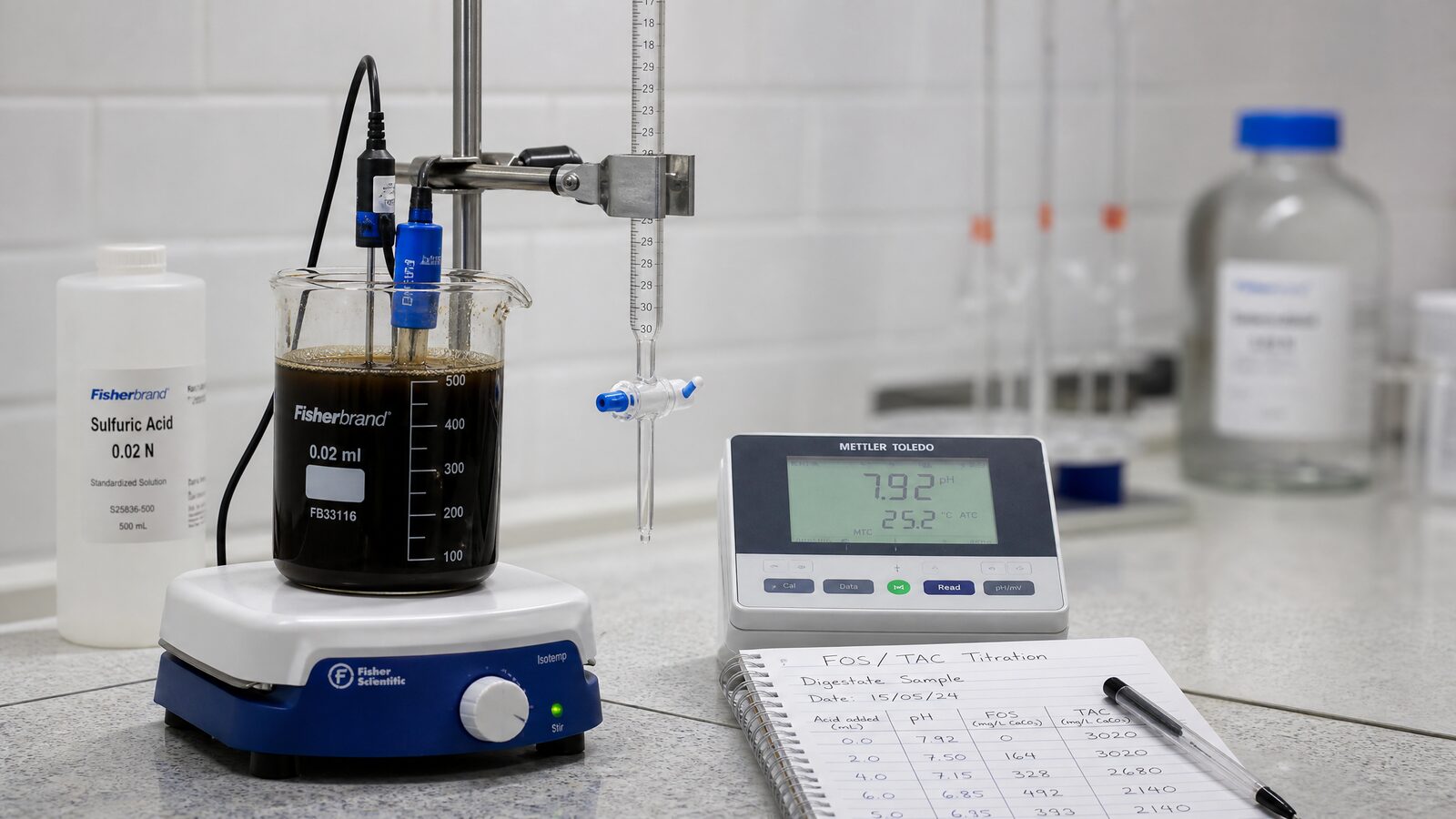
To monitor this stability, we use a critical operational metric known as the FOS/TAC ratio. This measurement, derived from titration, compares the level of volatile organic acids to the total inorganic carbonate alkalinity available to buffer the process.
FOS (Flüchtige Organische Säuren): An indicator of volatile fatty acid accumulation, usually expressed as an equivalent acid demand derived from titration. It provides a proxy for the acid burden on the system, though it does not distinguish between individual VFA species.
TAC (Totale Anorganische Carbonate): A measure of total alkalinity, primarily bicarbonate buffering capacity, which helps neutralise acid formation in the digester. Higher TAC values indicate greater buffering reserve.
FOS/TAC Titration Methodology in Practice
Although laboratories and instrument suppliers may use slightly different protocols, the standard plant method is broadly similar. A representative digestate sample is first collected, avoiding surface crust and settled grit where possible. The sample is then homogenised and, if required by the test method, diluted with deionised water to improve repeatability. The analysis is usually carried out by titrating the sample with a standard acid (typically 0.1N sulphuric acid) to two end points:
1. First end point, typically around pH 5.0: used to determine TAC, representing the available carbonate and bicarbonate alkalinity.
2. Second end point, typically around pH 4.4 to 4.3: used to estimate FOS, representing the volatile organic acid fraction inferred from the additional acid consumed.
The exact calculation method depends on the titration system, but the core principle is consistent: the more acid required to move through the lower pH range, the greater the acid burden in the sample. Good sampling practice matters. Results can be distorted by poor homogenisation, long delays between sampling and testing, CO₂ loss from warm samples, or inconsistent dilution factors. For operational trending, consistency of method is often more important than absolute comparison between different laboratories.
It is also important to note that FOS/TAC is a surrogate measurement; it does not directly measure individual VFA concentrations. Where process instability requires deeper investigation, laboratory GC (gas chromatography) analysis of individual VFAs (acetic, propionic, butyric, valeric acids) provides far more diagnostic value, particularly in identifying whether propionic acid accumulation is driving the imbalance.
Interpreting the Numbers
Monitoring the FOS/TAC ratio allows site operators to identify instability before a major pH fall occurs. pH alone is often too slow and too blunt a measure because digesters can remain near neutral while acids are already accumulating under buffered conditions, a phenomenon sometimes described as "hidden acidification."
0.20 – 0.30: Indicates a very stable, well-buffered process, although this should still be considered alongside gas yield and feed rate. Very low ratios can also reflect underloading in some systems, which may indicate capacity is being underutilised.
0.30 – 0.40: Often regarded as a strong operating range for many agricultural and food waste plants, provided gas production and methane percentage remain consistent. Many well-run commercial sites operate comfortably within this band.
0.50 – 0.60: A warning zone. This suggests that acids are accumulating faster than the available buffer can neutralise them. Common causes include overfeeding, sudden feedstock change, poor mixing, micronutrient limitation (particularly cobalt, nickel, selenium, molybdenum, and iron, essential cofactors for methanogenic enzymes), or inhibition of methanogens through ammonia or sulphide toxicity.
Above 0.60: Critical. Immediate action is usually required, such as reducing the organic loading rate, pausing difficult feedstocks, checking temperature stability, reviewing ammonia and sulphide levels, and in some cases adding buffering agents such as sodium bicarbonate or lime as a short-term control measure. At this level, the operator should also prepare contingency plans in case of further deterioration.
Operational Monitoring Advice
FOS/TAC should not be interpreted in isolation. It is most useful when reviewed as part of a routine process control set that includes pH, alkalinity, total and individual VFAs where available, gas flow, methane percentage, hydrogen sulphide, ammonia, digestate temperature, feed tonnage, dry matter, and agitation performance. A single acceptable ratio does not guarantee biological health if methane concentration is declining or if daily gas yield per tonne of feed is falling.
In practical plant operation, we recommend trend-based monitoring rather than reacting to one anomalous result. Test at a consistent frequency (ideally daily on high-throughput food waste plants, or at minimum twice weekly on agricultural systems), increase sampling frequency after feedstock changes or maintenance interventions, and compare laboratory values against real operating events. If FOS/TAC begins to rise, review the previous 3 to 7 days for changes in substrate blend, loading spikes, heating interruptions, mixer downtime, foaming, or evidence of inhibition. Early action is usually more effective than corrective dosing after the process has destabilised.
Micronutrient supplementation deserves special mention in the context of buffering and process stability. Many food waste AD plants in particular suffer from trace element deficiency because the feedstock does not supply sufficient cobalt, nickel, selenium, and molybdenum to sustain optimal methanogenic enzyme function. Micronutrient dosing, when properly calibrated, can significantly improve methanogenic resilience and reduce FOS/TAC volatility. However, over-dosing, particularly of heavy metals, must be avoided as it can create toxicity and compromise digestate quality.
Maintaining a consistent FOS/TAC ratio is one of the primary client benefits we provide through our technical oversight. By identifying trends early, we prevent costly biological crashes.
From Biogas to Biomethane: The Upgrading Process
While raw biogas can be burned in a Combined Heat and Power (CHP) engine to generate electricity, the future of the industry lies in Biomethane Upgrading. Biomethane is "Renewable Natural Gas" (RNG), biogas that has been cleaned of CO₂ and impurities to reach a methane content of 97% or higher.
Why Upgrade?
Upgrading biogas to biomethane opens up higher-value markets, including:
Grid Injection: Delivering renewable gas directly into the national gas grid, supported by the Green Gas Support Scheme (GGSS) in the UK.
Transport Fuel: Compressing the gas (Bio-CNG) or liquefying it (Bio-LNG) for use in heavy goods vehicles (HGVs), refuse collection vehicles, and other fleet applications.
Carbon Capture: The CO₂ removed during upgrading can be captured and used in the food and beverage industry, greenhouse horticulture, or for industrial applications, creating an additional revenue stream.
The economic case for upgrading has strengthened considerably as CHP Feed-in Tariff (FIT) and Renewable Obligation (RO) support schemes have closed to new entrants. Biomethane-to-grid with GGSS support now represents the dominant revenue model for new UK AD developments.
Upgrading Technologies
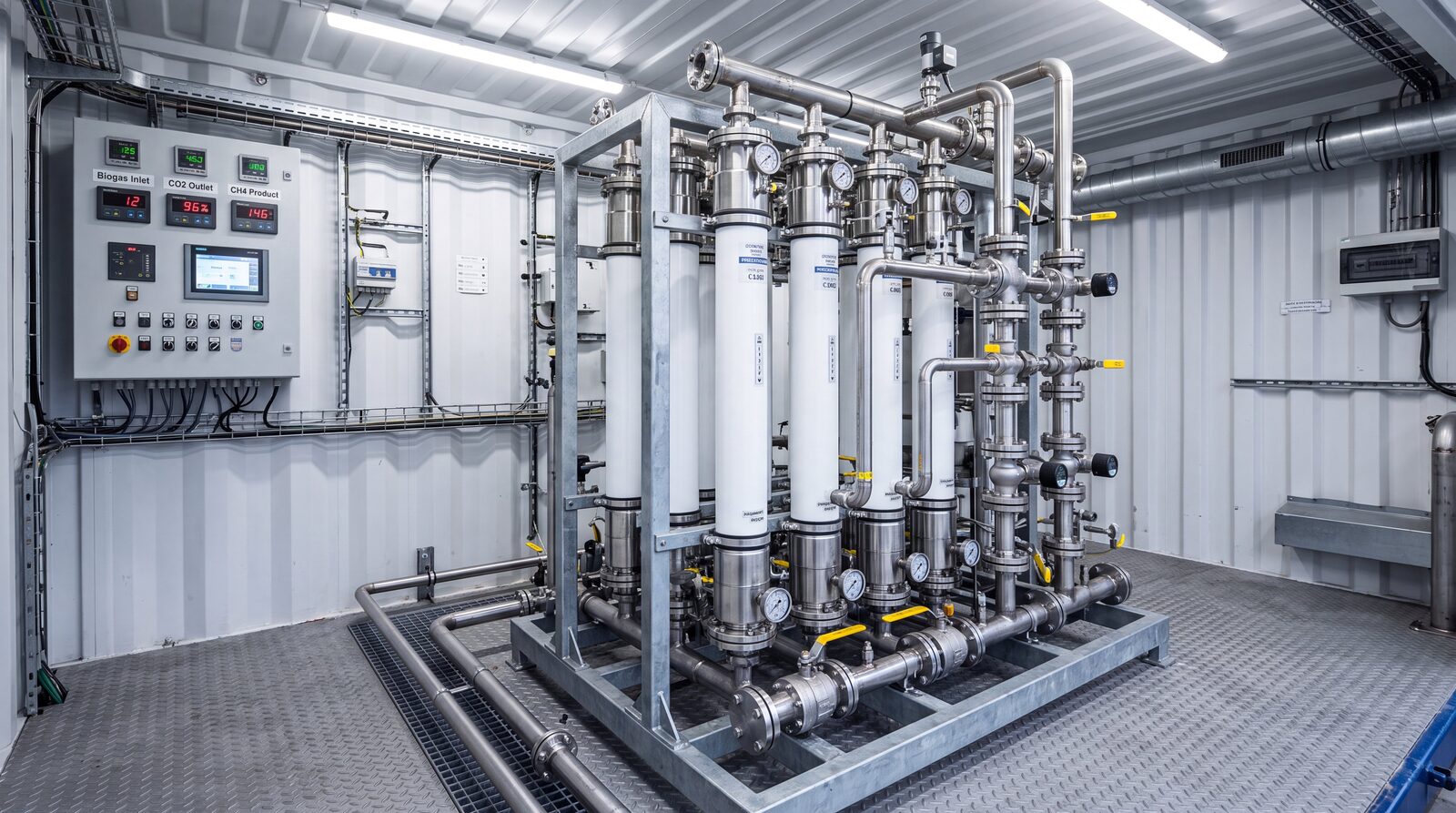
Several technologies are employed to separate methane from carbon dioxide and produce grid-quality biomethane. Technology selection depends on plant scale, target methane recovery, parasitic energy demand, expected gas contaminants, water availability, and the commercial value placed on methane slip reduction.
1. Membrane Separation
Uses semi-permeable membranes, commonly arranged in two or three stages, to separate CO₂, water vapour, and some trace gases from methane under pressure (typically 7–16 bar).
Pros: Compact footprint, modular expansion, relatively fast start-up, strong suitability for automated operation, and no chemical solvent handling. Well suited to plants in the 500–2,500 m³/hr raw biogas range.
Cons: Methane slip can become significant if staging is not optimised (typically 1–3% in well-configured systems, but potentially higher if membranes age or operating conditions drift), pretreatment is essential to protect membranes from H₂S, siloxanes, oil, and particulates, and performance is sensitive to pressure regime and feed gas consistency.
2. Water Scrubbing
Exploits the higher solubility of CO₂ and H₂S in water than methane. Pressurised biogas is contacted with water in an absorption column, with the dissolved gases then removed in regeneration stages.
Pros: Proven technology with a long track record, no chemical reagent requirement in the main absorption step, good performance where water management systems are well designed, and effective simultaneous bulk removal of CO₂ and H₂S.
Cons: Relatively high water demand unless water is recirculated efficiently, larger plant footprint than membranes, potential biological growth and scaling issues in the water circuit, and lower efficiency if operating conditions are not tightly controlled. Methane slip typically 1–2%.
3. Pressure Swing Adsorption (PSA)
Uses adsorbent media such as activated carbon or zeolites that selectively retain CO₂ and other impurities at elevated pressure, then release them during depressurisation and regeneration.
Pros: Dry process, no liquid solvent handling, high automation potential, and good methane purity when bed sequencing is well maintained.
Cons: Methane losses can occur in off-gas (typically 2–4% without tail gas recovery), adsorbent performance can deteriorate if pretreatment is poor, valve reliability is critical, and cyclical operation can be mechanically demanding. Less commonly chosen for new UK projects compared to membranes and water wash.
4. Chemical Scrubbing (Amine Wash)
Commonly uses amine-based solvents (such as MDEA or proprietary formulations) that chemically bind CO₂, followed by thermal regeneration of the solvent.
Pros: Very high methane purity (>99%), very low methane slip when properly operated (<0.1%), strong suitability for larger throughput applications, and good process control where high specification gas is required.
Cons: Higher operational complexity, solvent management requirements including anti-foaming and corrosion inhibitor dosing, significant heat demand for regeneration (typically supplied from CHP waste heat or biogas boiler), potential solvent degradation over time, and stricter maintenance and corrosion control obligations.
5. Emerging or Niche Systems
These include cryogenic upgrading and hybrid systems that combine membrane separation with PSA or scrubbing stages.
Pros: Can deliver very high methane purity and, in some cases, a recoverable liquid CO₂ product suitable for food-grade or industrial applications.
Cons: Generally higher capital cost, greater process complexity, and a narrower band of sites where the economics are favourable. Cryogenic systems may become more commercially attractive as the value of captured CO₂ increases.
In all cases, upgrading does not begin at the upgrader skid. Reliable performance depends on effective pre-treatment upstream, including gas cooling, condensate removal, particulate filtration, H₂S reduction (often via biological desulphurisation using air dosing into the digester headspace, supplemented by activated carbon or iron sponge polishing), and sometimes siloxane management. Poor raw gas conditioning increases downtime, shortens equipment life, and undermines methane recovery.
UK Biomethane Standards and Grid Injection
In the United Kingdom, biomethane injected into the grid must meet stringent quality standards set by the Gas Safety (Management) Regulations (GS(M)R). These standards ensure that the gas is safe for domestic use and does not damage grid infrastructure.
Key Requirements for Grid Entry
GS(M)R compliance is more detailed than simply achieving a high methane percentage. The gas must be suitable for safe conveyance and end use across the public gas gas network, and this requires control of composition, combustion characteristics, pressure, and contaminants.
Methane and Calorific Value (CV): Biomethane must be enriched or processed to achieve the required Wobbe Index and calorific value envelope for the receiving network. This is why methane concentration alone is not the full compliance test. Gas quality is assessed against energy content and interchangeability with natural gas already in the system.
Oxygen Content: Oxygen must be kept very low, commonly around or below 0.2% by volume and often much lower depending on the network agreement and injection set-up. Excess oxygen increases corrosion risk and can create safety and specification issues.
Hydrogen Sulphide and Total Sulphur: Sulphur species must be tightly controlled to prevent corrosion, odour issues, and non-compliance with network limits. In practice, this requires effective bulk H₂S removal upstream (typically reducing from 200–3,000+ ppm to <5 ppm) and reliable polishing downstream.
Water Dew Point: The gas must be sufficiently dry to prevent condensation in the network. Water carryover can lead to corrosion, hydrate formation, and measurement problems, so drying (typically using chilled water, glycol, or PSA drying systems) and dew point verification are central to grid entry design.
Particulates, Oils, and Other Contaminants: Grid operators require clean gas free from damaging solids, compressor oil carryover, and problematic trace compounds. Filtration, condensate management, and maintenance of compression systems are therefore compliance-critical.
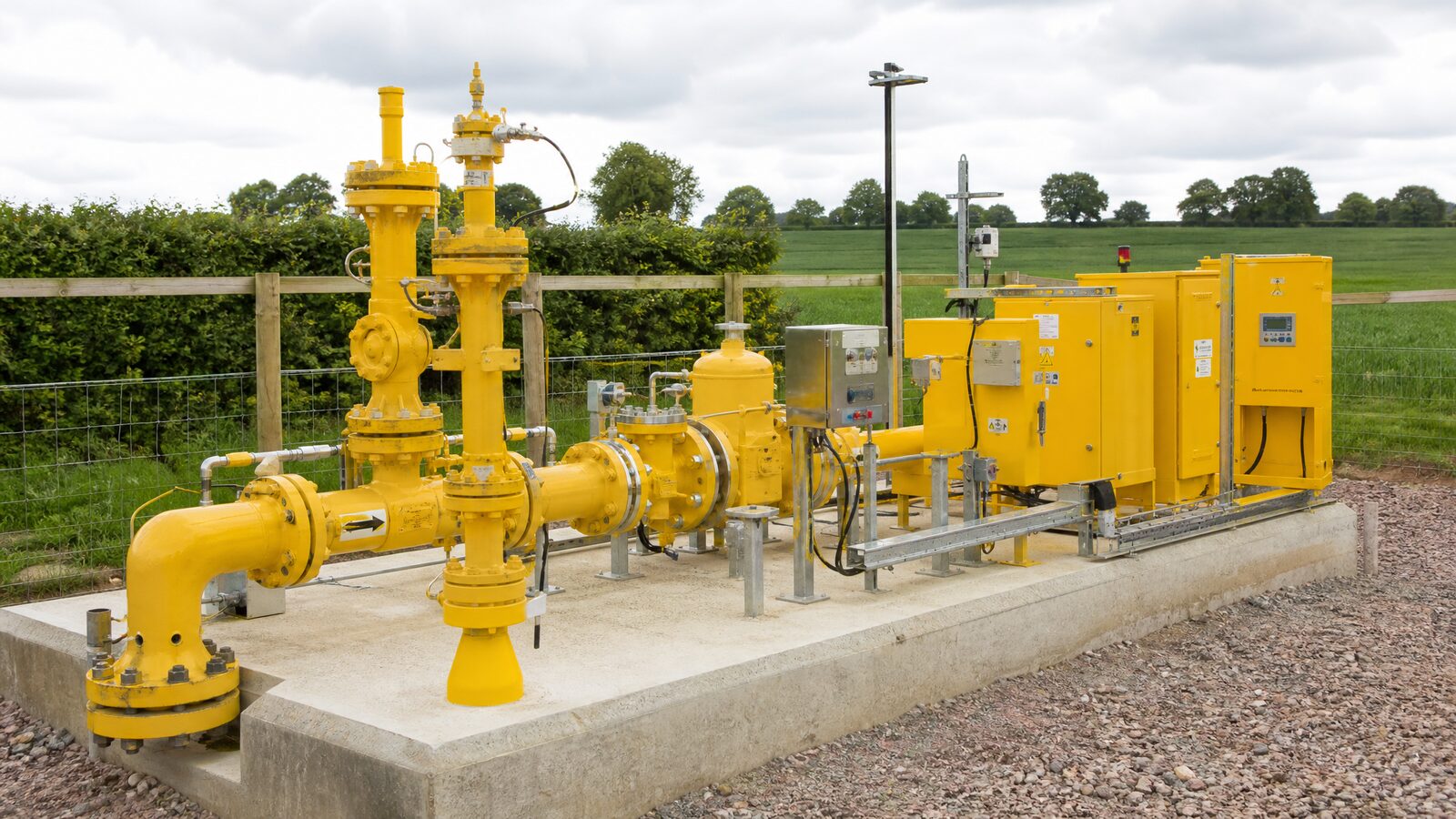
Pressure and Flow Control: The gas must enter the network at the agreed pressure and within the permitted flow envelope. This requires a properly designed grid entry unit (GEU) with pressure regulation, slam-shut protection, metering, and remote monitoring.
Propane Addition: Because upgraded biomethane may not naturally meet the required CV or Wobbe Index, propane enrichment is frequently used at the grid entry unit. This must be carefully controlled and metered, as over- or under-enrichment can place the site out of specification and trigger export curtailment.
Odorisation and Measurement: Depending on the network arrangement, biomethane may require odorisation before injection, along with fiscal metering and continuous gas quality measurement using calibrated analysers.
Practical GS(M)R Monitoring Requirements
In operational terms, compliance depends on continuous verification rather than occasional testing. Sites typically require online measurement of methane, CO₂, oxygen, pressure, temperature, and flow, with additional monitoring for moisture and sulphur compounds. Gas chromatographs, oxygen analysers, dew point instrumentation, and emergency shutdown logic are all part of the compliance framework. Calibration discipline is especially important. A well-performing upgrader can still cause a shut-in event if an analyser drifts, if propane dosing fails, or if moisture carryover reaches the grid entry unit.
Operators should also understand the difference between process alarms and export-critical alarms. A minor variation in raw gas composition may be manageable internally, but an oxygen excursion, low CV event, or analyser fault at the point of injection can trigger an immediate export stop. This is why robust standard operating procedures, alarm response plans, and planned analyser maintenance are as important as the upgrading technology itself.
Ensuring compliance with these regulations requires sophisticated monitoring equipment and expert operational knowledge. Failure to meet these standards can result in the grid operator "shutting in" the site, leading to significant financial losses, both from lost gas export revenue and from wasted propane, electricity, and operational time during the restart and re-qualification process.
Conclusion: Optimising Your AD Asset
The journey from organic waste to a high-purity renewable fuel is complex. It requires a deep understanding of microbial "Basics," the chemical safety net of "Buffering Capacity," and the technical rigour of "Biomethane Upgrading." It also requires disciplined day-to-day operation: representative sampling, reliable trend analysis, feedstock control, stable mixing and heating, and a clear response plan when indicators begin to move out of range.
At TIFT Services Ltd, we help site owners navigate these complexities. From managing daily FOS/TAC titrations to overseeing the maintenance of membrane upgrading systems, our 15+ years of experience ensures your facility operates at peak efficiency. We focus on practical operational control as much as headline process design, because stable biology, well-maintained plant, and compliant gas export are all linked.
If you are looking to improve your site's gas quality or require expert regulatory guidance for grid injection, please contact us today. We are committed to leading the change in renewable energy accessibility, ensuring a sustainable future for the next generation.