
C is for Carbon Capture, CHP & Compliance
1. Carbon Capture and BECCS: The Future of AD
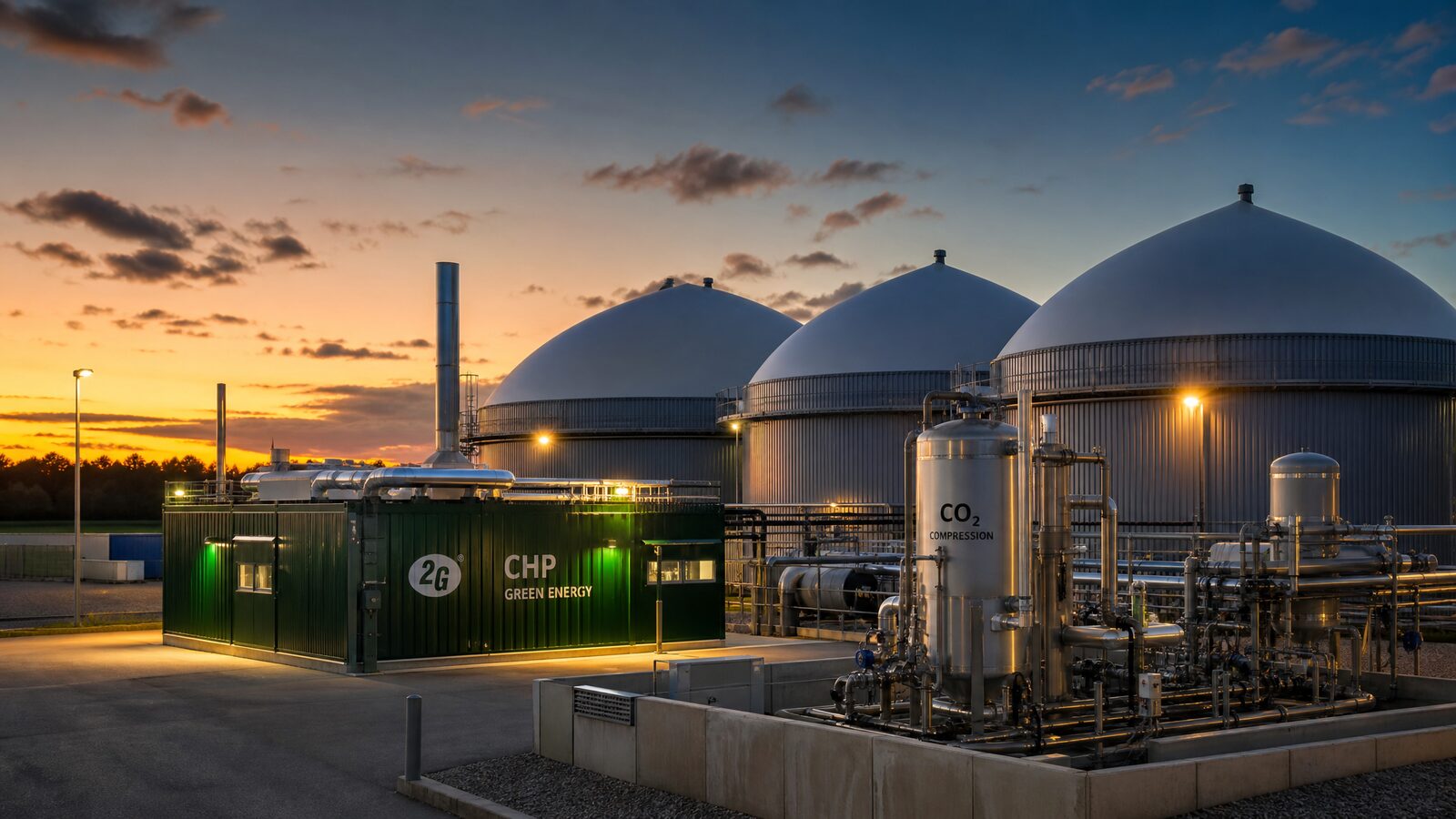
Carbon Capture, specifically Bioenergy with Carbon Capture and Storage (BECCS), represents the next frontier for the anaerobic digestion industry. While AD is already a carbon-neutral process, releasing only the biogenic carbon that feedstocks absorbed during growth, the addition of carbon capture technology allows us to move into the realm of carbon-negative energy production, actively removing CO₂ from the atmospheric cycle.
The BECCS Pathway in Anaerobic Digestion
In a standard AD process, biogas is produced, consisting primarily of methane (CH₄) and carbon dioxide (CO₂). When this biogas is upgraded to biomethane for injection into the national gas grid, the CO₂ is typically separated and, in many cases, vented into the atmosphere. BECCS involves capturing this high-purity CO₂ stream, drying it, compressing it to transport specification, and routing it either for permanent geological storage or for tightly controlled long-term utilisation pathways where carbon accounting remains robust.
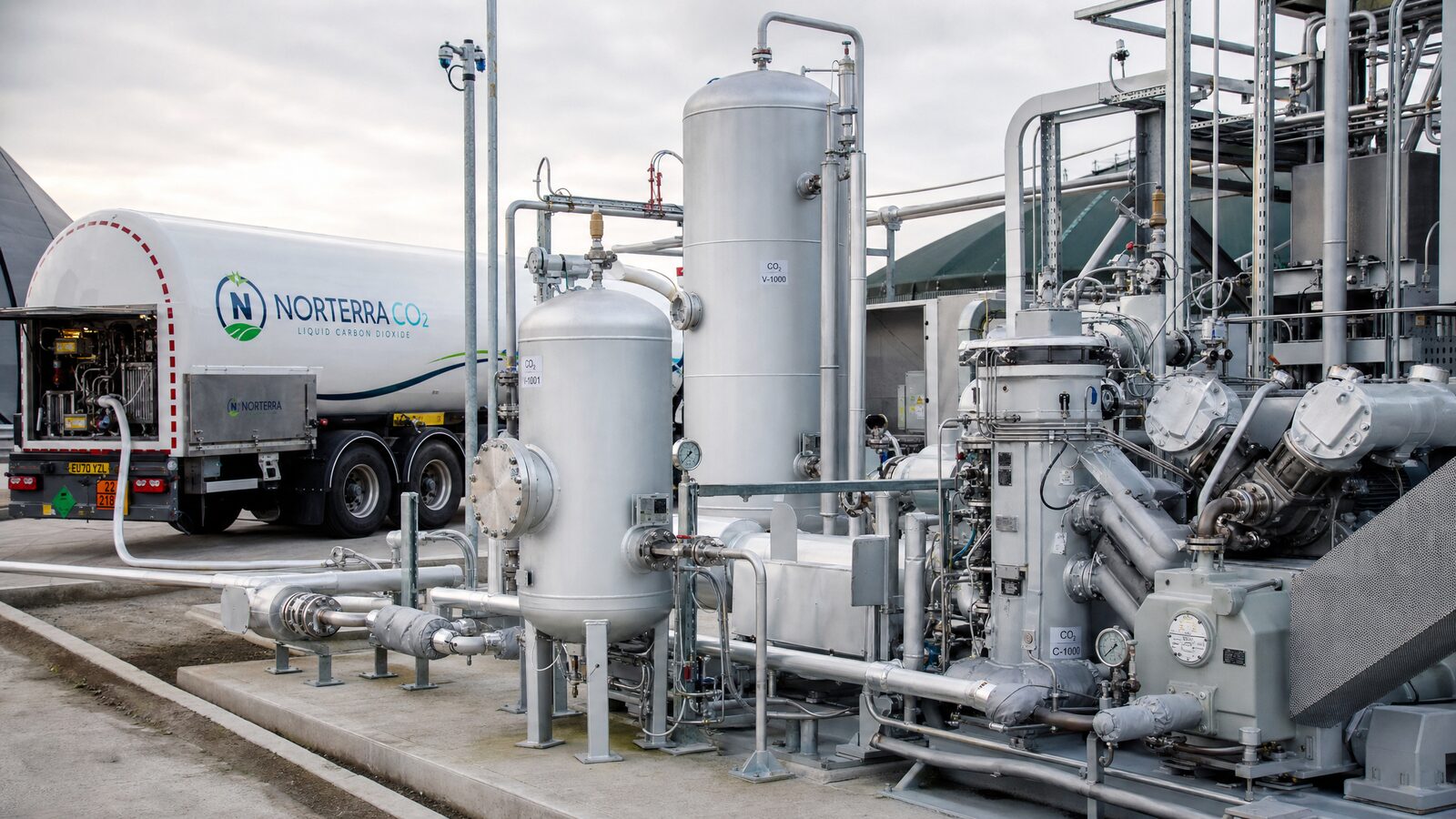
For AD operators, the most practical capture route is usually pre-combustion capture at the upgrading stage. In that configuration, raw biogas passes through cleaning systems to remove hydrogen sulphide, moisture, particulates, and trace contaminants before the methane and carbon dioxide are separated. Depending on plant design, this separation may be achieved through water wash, chemical scrubbing, pressure swing adsorption, or membrane upgrading. The resulting carbon dioxide stream is typically far more concentrated (often 95–99% CO₂ after conditioning) than flue gas from a CHP stack (typically 8–15% CO₂), which means lower separation complexity and, in many cases, a more favourable energy balance for capture.
Additional conditioning is still required before that CO₂ can enter a transport chain. Operators should expect dehydration to very low water content (typically <50 ppm), oxygen management, contaminant checks (particularly for residual H₂S, methane, and volatile organic compounds), multi-stage compression to transport pressures (often 15–20 bar for road tanker or up to 110+ bar for pipeline), and temporary on-site buffering or storage. The exact specification depends on the intended offtake route, but common operational concerns include residual methane slip, sulphur carryover, compressor reliability, cooling water demand, and the integrity of metering equipment used for mass-balance and carbon accounting. If these points are not managed properly, the commercial value of the captured carbon stream can be undermined even where the capture concept is technically sound.
This process effectively removes carbon dioxide from the atmospheric cycle. By capturing biogenic carbon, AD sites become vital assets in the UK's strategy to reach Net Zero. According to recent industry analysis, the UK AD sector has the technical potential to capture over 8 million tonnes of bio-CO₂ annually if all unavoidable organic waste were treated via AD with carbon capture integration, representing a significant proportion of the UK's engineered greenhouse gas removal requirement.
UK Cluster Infrastructure and Export Routes
The strategic viability of BECCS is increasingly linked to the development of UK carbon transport and storage clusters. For many sites, the core question is no longer whether biogenic CO₂ can be captured, but whether it can be aggregated, moved, and accepted into a compliant storage chain at acceptable cost. The UK cluster model is intended to provide that route through shared pipeline networks, shipping logistics, and licensed storage assets, principally in depleted North Sea gas fields and saline aquifers.
In practical terms, this means AD developers need to assess proximity to cluster infrastructure (HyNet, East Coast Cluster, Acorn, and Viking being the leading UK projects), likely connection costs, road tanker or rail logistics for interim movement, and the specification requirements of aggregation hubs. Sites in or near industrial regions connected to carbon capture and storage infrastructure may have a significantly clearer pathway than isolated rural plants unless third-party collection and liquefaction models become more widely available. For smaller plants, hub-and-spoke arrangements, where biogenic CO₂ from multiple AD sites is collected by road tanker and aggregated at a central liquefaction and loading facility, are likely to be more realistic than direct dedicated export infrastructure.
From an operational perspective, cluster readiness should be considered early in project development. We advise reviewing:
Expected annual biogenic CO₂ volume and seasonal variability (noting that feedstock seasonality, particularly in agricultural AD, may create variable capture rates)
The purity of the stream after upgrading and polishing
Compression power demand and standby requirements
Temporary storage duration, vent management, and emergency release protocols
Road access, tanker loading arrangements, and hazardous area (DSEAR/ATEX) controls
Contractual interfaces for transport, acceptance, and storage confirmation
The accounting methodology and verification chain required for carbon credit or removal claims
Strategic Benefits for Site Owners
For site owners and developers, implementing carbon capture is not merely an environmental gesture; it is a strategic business decision. As carbon markets evolve and the UK Emissions Trading Scheme (UK ETS) potentially extends to encompass engineered removals, the ability to provide verified carbon removals will likely become a significant revenue stream. The strongest projects are usually those that treat carbon capture as part of the plant's operating model rather than as a bolt-on technology.
A practical example is a biomethane-to-grid site that already removes CO₂ during upgrading, has stable feedstock contracts, and can demonstrate reliable gas quality and metered throughput. That site may be well placed to add dehydration, compression, and export logistics, provided that its parasitic load increase, planning implications, permit variations, and DSEAR assessment are addressed in advance. By contrast, a site with variable feedstock quality, poor gas cleaning performance, or limited electrical import capacity may find that capture economics weaken quickly unless core operations are first stabilised.
We assist our clients in evaluating the feasibility of these technologies, ensuring that the renewable energy strategy aligns with future infrastructure developments, such as the UK's regional carbon capture clusters.
2. CHP: The Heart of Operational Efficiency
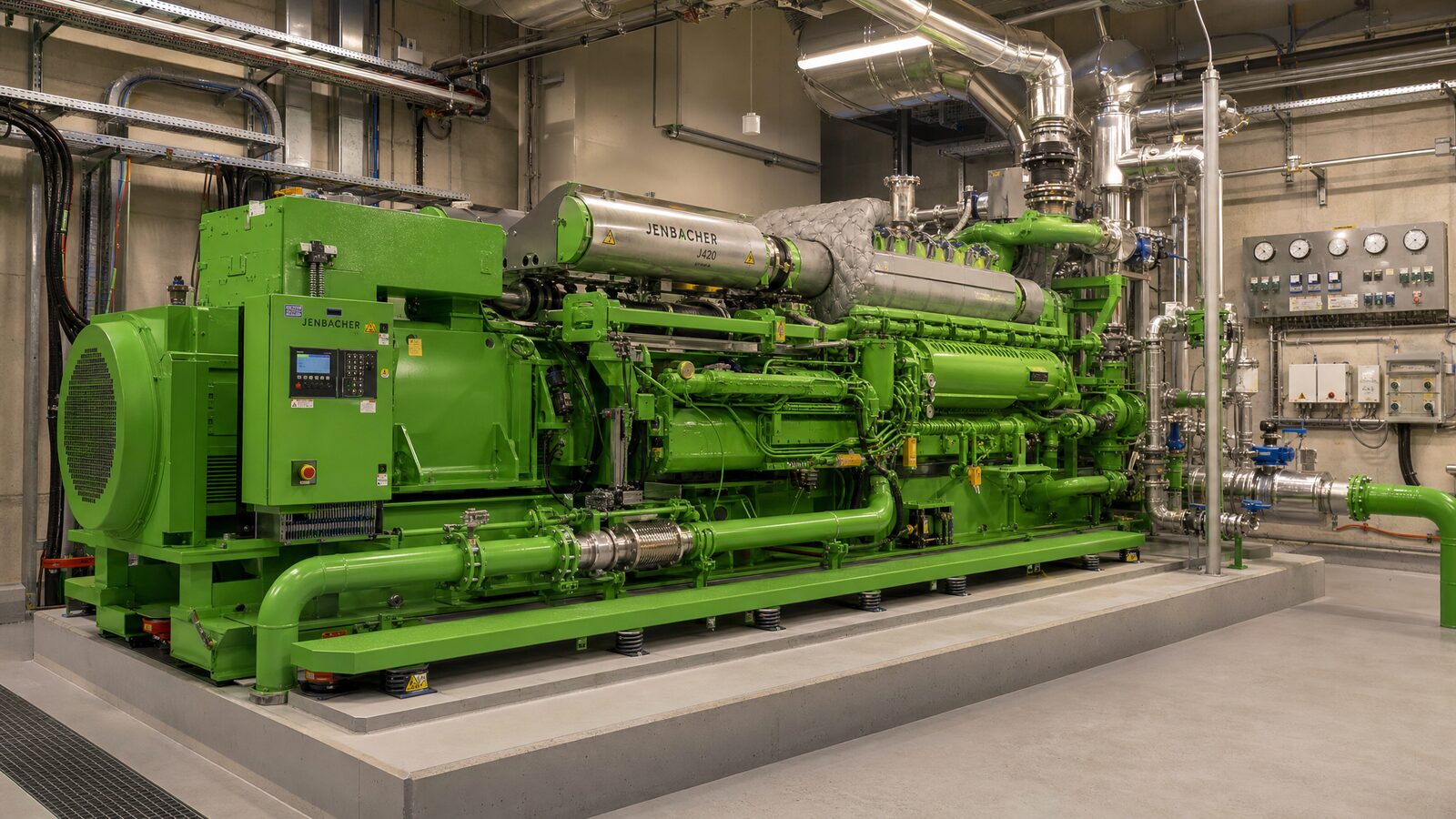
Combined Heat and Power (CHP) remains the technological cornerstone of many AD facilities, particularly those commissioned under the Feed-in Tariff (FIT) or Renewables Obligation (RO) schemes. A CHP unit utilises biogas to generate electricity while simultaneously capturing the heat produced during the combustion process. This dual-purpose utility significantly increases the overall efficiency of the plant, typically achieving 80–90% combined efficiency compared to 35–45% for electricity-only generation.
Maximising CHP Performance
To maintain optimal performance, a CHP unit requires a rigorous maintenance programme. The internal combustion engines used in these units are precision-engineered to run on biogas, but impurities such as hydrogen sulphide (H₂S) and siloxanes can lead to premature wear, lubrication issues, combustion instability, deposit formation, and reduced efficiency if not properly managed.
In practice, CHP reliability depends on disciplined routine maintenance rather than reactive intervention alone. While service intervals vary by engine manufacturer and gas quality, operators typically work to a structured schedule that may include:
Daily and weekly checks for oil level, coolant condition, gas pressure stability, condensate drainage, exhaust temperature trends, vibration monitoring, and alarm review
250 to 500 running-hour inspections covering filters, spark plugs where relevant, ignition system performance, belts, valve clearances, and visible leaks
1,000 to 2,000 running-hour minor services including oil and filter changes, breather checks, intercooler inspection, knock sensor verification, and calibration review
Major services at wider intervals for turbocharger inspection or rebuild, cylinder head work, heat exchanger cleaning, emissions checks, and control-system verification
Top-end and full overhaul planning based on engine hours, oil analysis trends, vibration trends, and manufacturer guidance, typically at 30,000–60,000 running hours depending on engine size and gas quality history
Gas quality management sits behind that maintenance regime. For a biogas CHP, even modest instability in H₂S removal can accelerate corrosion in pipework, damage exhaust catalysts and systems, shorten oil life, and increase unplanned shutdowns. Siloxanes are equally problematic because they combust into abrasive silica deposits that score cylinder liners, foul exhaust valves, and impair heat transfer surfaces. A plant that monitors methane, carbon dioxide, oxygen, H₂S, dew point, pressure, and contaminant breakthrough consistently is in a much stronger position to protect engine availability than one that relies on periodic testing only.
Our approach to AD site management emphasises the following for CHP operations:
Biogas Quality Monitoring: Constant analysis of biogas composition to protect the CHP engine, including real-time H₂S monitoring, periodic siloxane testing where sewage sludge or certain industrial wastes are processed, and dew point tracking
Heat Recovery Optimisation: Ensuring that the captured heat is utilised effectively, whether for heating the primary digesters, pasteurisation systems, drying equipment, or for external heat contracts via district heating or industrial offtake
Planned Preventative Maintenance (PPM): Minimising downtime through scheduled servicing, which is critical for maintaining high availability (targeting >92% availability on well-managed sites) and meeting energy export targets
Parasitic Load and Efficiency Control
One of the most overlooked performance issues on AD sites is parasitic load, the proportion of the site's own electricity generation consumed internally. Gross electrical output from the CHP can appear satisfactory while net export remains weak because too much generation is being consumed internally by mixers, pumps, blowers, digestate treatment, gas compression, control systems, lighting, and auxiliary heating equipment. On some sites, internal demand may represent 10–15% of generation during stable operation; on others, particularly plants with extensive pre-treatment, pasteurisation, liquor treatment, or compression equipment, the parasitic load can reach 25–35% or higher, becoming a major commercial constraint.
For that reason, CHP performance should be assessed in terms of net site efficiency rather than engine nameplate output alone. Operators should track:
Gross electrical generation versus net export (kWh basis, daily and monthly)
Thermal energy recovered versus thermal energy actually used (identifying heat rejection)
Auxiliary consumption by major process area (use sub-metering where possible)
Seasonal shifts in heat demand for digester temperature control
Incremental load created by gas upgrading, carbon capture, or digestate processing equipment
A practical operational example is a site where a CHP engine continues to run at acceptable electrical efficiency, but fouled heat exchangers, poor hot-water balancing, excessive recirculation pumping, or inefficient mixing schedules increase internal energy consumption. In those cases, the issue is not solely engine condition; it is the interaction between the CHP and the wider plant utility system. We therefore review CHP output alongside pumps, mixers, boilers, chillers, compressors, and digestate treatment assets to identify where parasitic demand can be reduced without compromising process stability.
The Role of CHP in BECCS
For sites that rely on CHP rather than biomethane upgrading, carbon capture can still be implemented via post-combustion capture from the flue gases. Although this involves a higher energy penalty compared to capturing CO₂ during biogas upgrading, because the flue gas CO₂ concentration is much lower (typically 8–15% compared to 40–50% in raw biogas or 95%+ in the upgrader reject stream); it remains a viable route for large-scale facilities to reduce their carbon footprint and contribute to national greenhouse gas removal targets.
In post-combustion applications, flue gas generally contains oxygen, water vapour, NOx, and combustion by-products that must be managed before efficient capture can occur. This often points towards solvent-based systems (amine scrubbing) with additional flue gas cooling, polishing, and energy input for solvent regeneration. The implication for operators is clear: if the CHP and associated heat recovery system are not already running in a controlled and efficient manner, the addition of carbon capture can magnify existing weaknesses. A site with unstable engine load, poor emissions control, or excessive internal electricity demand may struggle to support BECCS without wider plant optimisation first.
3. Compliance: Navigating the Regulatory Landscape
The anaerobic digestion industry is subject to some of the most stringent environmental and safety regulations in the UK. Compliance is not a one-time achievement but a continuous operational requirement that demands expert oversight and meticulous record-keeping. The regulatory landscape is also evolving, with increasing expectations around emissions monitoring, carbon accounting, and fire prevention, all of which require proactive management rather than reactive response.
WAMITAB and Technical Competence
Central to UK compliance is the requirement for a Technically Competent Manager (TCM). Regulators, including the Environment Agency, require site operators to demonstrate technical competence through recognised qualifications such as WAMITAB (Waste Management Industry Training and Advisory Board).
At TIFT Services Ltd, our team holds MROC5 (WAMITAB) certification, providing our clients with the assurance that their sites are managed in accordance with the highest industry standards. In practical terms, MROC5 supports competence in overseeing permitted waste operations, understanding licence conditions, identifying non-conformance, maintaining operational controls, and ensuring that records are sufficient to satisfy regulatory scrutiny. This certification is essential for maintaining environmental permits and ensuring that the facility operates within the legal framework defined by the Environmental Permitting Regulations.
For AD operators, technical competence is not limited to holding a certificate. It must be visible in how the site is run. Regulators will expect evidence that competent management is influencing acceptance procedures, feedstock checks, infrastructure integrity, incident response, emissions control, and the management of contractors. Where BECCS or additional gas infrastructure is introduced, the standard of management control required generally increases because operators are adding more interfaces, more monitoring points, and more potential failure modes.
Key Areas of Regulatory Focus
Compliance for an AD site covering Carbon Capture and CHP involves several overlapping domains:
1. Environmental Permits: Managing emissions to air, water, and land, including the rigorous monitoring of CHP exhaust gases (NOx, CO, particulates), flare operation records, digestate quality, and odour control. The Medium Combustion Plant Directive (MCPD) now imposes additional requirements on CHP engines above certain thermal input thresholds, including mandatory emissions monitoring and registration.
2. Health and Safety: Managing the risks associated with high-pressure gas systems, flammable biogas (LEL monitoring, DSEAR zones, and explosion-protection documentation), confined space entry protocols, the mechanical hazards of CHP units and rotating equipment, and lone working procedures.
3. Planning and Feedstock Compliance: Ensuring that all feedstocks processed on-site are permitted under the environmental permit and any Animal By-Product (ABP) approval, and that the site adheres to its original planning consent regarding feedstock types, throughput, vehicle movements, operating hours, and noise limits.
4. Measurement, Reporting, and Verification (MRV): For sites involved in carbon capture, accurate MRV is essential to prove that the CO₂ has been captured and stored correctly, which is a requirement for participating in carbon credit schemes or future UK ETS removals frameworks. This includes mass-balance accounting, transfer metering, and chain-of-custody documentation.
5. Fire Prevention Plans (FPP): The Environment Agency now requires Fire Prevention Plans for most permitted waste sites, including AD facilities. These must cover feedstock storage, biogas risks, CHP exhaust systems, and any additional storage associated with carbon capture. The plan must be reviewed and updated following any material change to site operations or layout.
Environmental permitting is often where operational weaknesses become most visible. Sites should confirm that the permit accurately reflects the activities actually taking place, including feedstock categories, treatment capacity, pasteurisation arrangements where applicable, CHP operation, digestate storage, emissions points, and any additional carbon capture plant. If a site installs gas upgrading, liquefaction, CO₂ compression, or new storage vessels without reviewing the permit position first, it may create immediate compliance exposure. Permit variations, planning implications, and changes to monitoring obligations should therefore be reviewed before equipment is commissioned.
From a practical standpoint, operators should maintain a compliance checklist that covers at least the following:
Confirm that incoming feedstocks match permit and waste acceptance criteria (including ABP categories where applicable)
Retain load inspection records, waste transfer notes, duty of care documentation, and non-conformance reports
Review digester operating temperatures, retention controls, and pasteurisation records where relevant (including any ABPR T24 validation data)
Check CHP emissions monitoring schedules, service logs, and breakdown records
Verify calibration status for gas analysers, flow meters, weigh systems, and carbon accounting instruments
Inspect bunds, drainage controls, storage lagoons, spill response equipment, and site surfacing integrity
Review odour, noise, and bioaerosol risk controls where applicable
Maintain up-to-date fire prevention, emergency response, and hazardous area documentation
Record digestate sampling, storage volumes, and off-site movements (including any Waste Exemption or Quality Protocol documentation)
Ensure that any venting, flaring, or abnormal emissions events are logged and investigated
Confirm that staff training, contractor induction, and TCM attendance records remain current
Environmental Permitting Specifics for CHP and BECCS
CHP and carbon capture add important permitting details that should not be treated as secondary matters. A CHP plant may require defined emissions monitoring under the MCPD, maintenance records that support emissions performance, and clear evidence that abnormal operation is managed appropriately. Stack emissions, flare use, and bypass events should be recorded in a way that allows both operational review and regulatory reporting.
Where carbon capture is introduced, additional attention is typically required for the handling of compressed gases, condensate and solvent management where relevant, storage vessel design and inspection regime, tanker loading procedures, vent points, and the MRV chain that proves the captured CO₂ has not simply been displaced or lost without accounting. For projects intending to claim removals, metering must be accurate and auditable at every critical transfer point. That includes capture quantity, conditioning losses, transport handover, and final storage confirmation through the relevant commercial and technical chain.
Our client benefits include peace of mind that all regulatory obligations are being met, reducing the risk of enforcement action or financial penalties.
Integrating C: A Holistic Approach
Successful AD operations require the seamless integration of these three "C"s. Carbon Capture offers the potential for future-proofing and additional revenue; CHP provides the immediate technical efficiency required for energy production; and Compliance ensures that the entire operation remains sustainable and legally sound.
In operational terms, these subjects cannot be managed in isolation. A site that plans to capture biogenic CO₂ must first establish stable digestion performance, consistent gas quality, dependable CHP or upgrading operation, and a compliance system that can support added monitoring and reporting. If one of those elements is weak, the others are affected. For example, unstable feedstock composition can reduce gas yield and alter contaminant load. That in turn can affect CHP maintenance frequency, internal energy demand, emissions performance, and the consistency of the carbon stream intended for capture.
A practical example is an agricultural and food-waste AD site operating a CHP-led energy model while assessing a future move to biomethane upgrading with CO₂ capture. The site may begin by tightening feedstock acceptance, improving H₂S control, and reducing unplanned CHP downtime through better servicing discipline. Once engine performance, parasitic load, and digestate management are brought under control, the operator is in a much stronger position to evaluate whether the export route for captured CO₂ is commercially and technically realistic. At that stage, permit variation requirements, tanker loading arrangements, metering accuracy, and cluster access can be reviewed on the basis of stable plant data rather than assumptions.
A second example is a biomethane-to-grid facility where upgrading already produces a concentrated CO₂ stream. On paper, BECCS may appear straightforward. In reality, the decision still depends on available power for compression, the effect of new auxiliaries on net site efficiency, the planning and permitting implications of added storage and loading infrastructure, and the ability to maintain an auditable MRV chain. If CHP remains on-site for standby or thermal support, its maintenance performance and emissions controls still matter because the overall plant must function as one integrated system rather than a set of disconnected assets.
As the industry moves towards 2030 and beyond, the complexity of managing these systems will only increase. We provide the technical expertise and operational oversight necessary to navigate this complexity. By focusing on regulatory excellence and the latest in renewable technology, we help our partners transform their facilities into leaders of the green energy transition.
If you require professional guidance on optimising your CHP performance, navigating WAMITAB requirements, or exploring the feasibility of Carbon Capture at your facility, please contact our team to discuss how we can support your goals.