
D is for Digestate, Degradation & Design
Digestate: A Circular Economy Resource
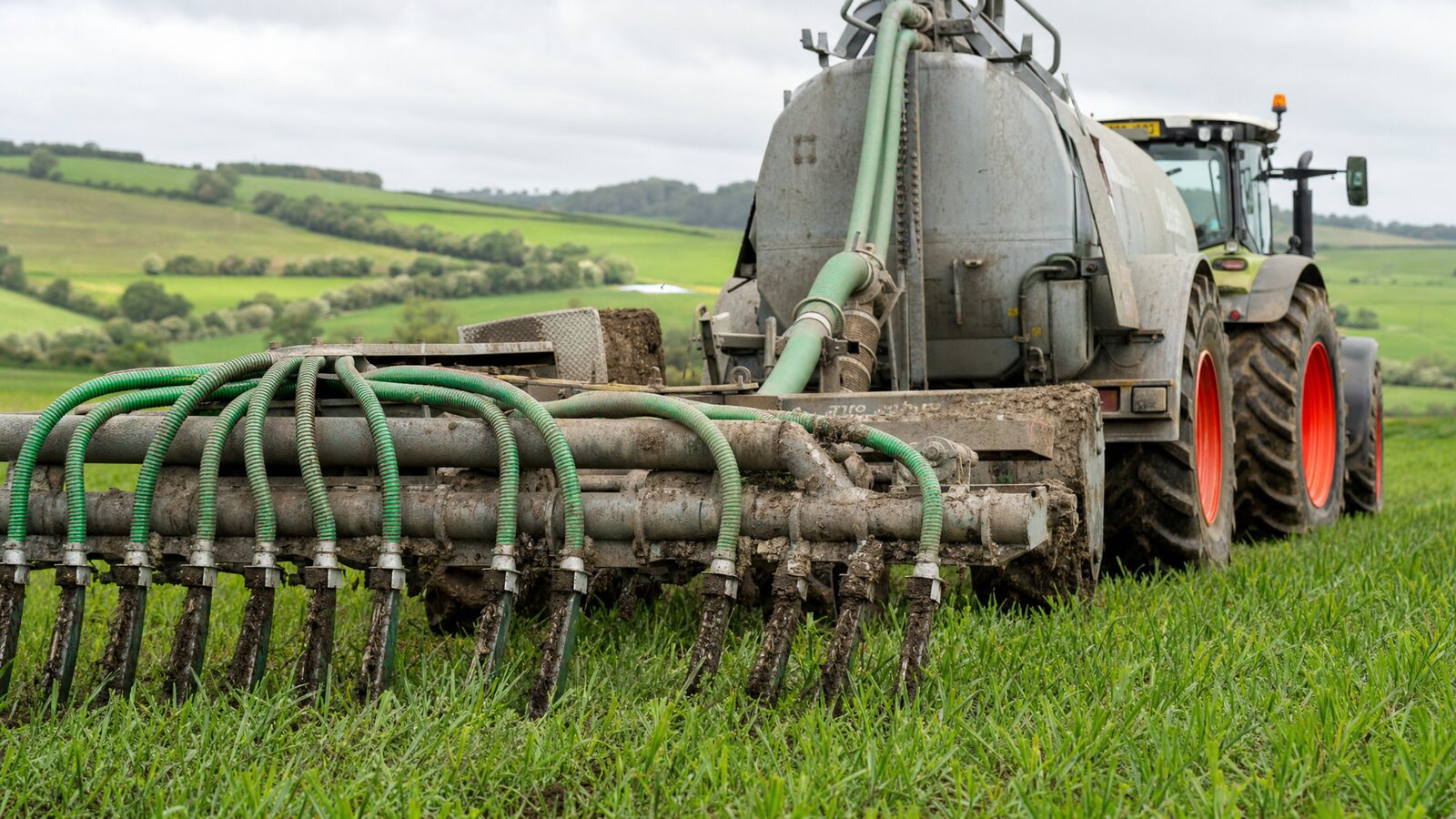
One of the most significant misconceptions in the early days of Anaerobic Digestion was the classification of digestate as a waste product. In modern AD operations, we view digestate as a high-value bio-fertiliser and a cornerstone of the circular economy, returning nutrients to the soil that would otherwise be lost to landfill or incineration.
The Composition of Digestate
Digestate is the material remaining after the anaerobic digestion process has extracted biogas from organic feedstocks. It consists of liquid and solid fractions rich in essential plant nutrients, including Nitrogen (N), Phosphorus (P), and Potassium (K). Because the digestion process mineralises organic nitrogen into ammonium (NH₄⁺), the nitrogen in digestate is often more readily available to crops than the nitrogen found in raw manures or slurries, giving it a significant agronomic advantage in terms of timing and precision of nutrient delivery.
In practical terms, whole digestate and its separated fractions can vary significantly depending on feedstock mix, dilution water, separation efficiency, and residence time. Typical broad ranges seen in UK AD operations may include total nitrogen at approximately 2 to 7 kg/m³ in liquid fractions, ammonium-N often representing 50% to 80% of total nitrogen, phosphate typically around 0.5 to 2.5 kg/m³, and potash frequently within 2 to 6 kg/m³. Solid fractions can carry a higher share of phosphorus and organic matter, making them more suitable where soil conditioning and phosphate replacement are priorities.
It is important to note that the carbon-to-nitrogen ratio of digestate is typically lower than that of raw feedstocks, because a significant proportion of the carbon has been converted to biogas (CH₄ and CO₂) during digestion. This means digestate behaves differently to compost or raw manure in the soil; it mineralises more quickly but contributes less stable organic matter to long-term soil carbon stocks. Understanding this distinction is important for farmers and agronomists planning nutrient management strategies.
This nutrient profile must be verified by routine laboratory analysis rather than assumed from feedstock declarations alone. We recommend establishing a sampling protocol that covers total solids, volatile solids, total nitrogen, ammonium nitrogen, phosphate, potash, sulphur, pH, dry matter, and where relevant micronutrients and trace elements. Practical operation benefits from linking these results to spreading plans so that application rates are set against crop demand, available storage, and field-specific restrictions.
Regulatory Compliance and PAS 110
To transition digestate from a "waste" status to a "product" status in the UK, it must typically meet the PAS 110 specification. This industry-standard, developed by BSI (British Standards Institution) in conjunction with WRAP and the industry, ensures that the material is safe, consistent, and fit for purpose. We provide expert regulatory compliance support to help site owners navigate these requirements, ensuring that their digestate meets the necessary heavy metal limits, pathogen destruction protocols, physical contaminant thresholds, and stability markers.
PAS 110 is not simply a single laboratory certificate. It is a specification covering feedstock control, process validation, quality management, sampling frequency, product consistency, and end-use suitability. In operational terms, this means you need documented input controls, traceability of accepted materials, defined process parameters, and evidence that the digestion and, where applicable, pasteurisation stages are being maintained within validated limits. Operators must also align with the relevant Quality Protocol or End of Waste position if they intend to place digestate on land as a product rather than manage it as waste.
From a technical standpoint, PAS 110 compliance commonly requires demonstration of:
Approved feedstock controls: Only suitable source-segregated biodegradable materials should enter the process. This includes maintaining a list of approved feedstock types, rejecting non-conforming loads, and documenting all acceptance decisions.
Pathogen reduction performance: Validation of time and temperature treatment where required (typically 70°C for one hour in a pasteurisation step for ABP Category 3 materials, or equivalent validated processes), with routine monitoring and record retention.
Physical contaminant limits: Visible plastics, glass, metal, and other man-made contaminants must be controlled to acceptable thresholds, typically <0.5% w/w above 2mm for plastics. This is one of the most challenging aspects for food waste AD plants receiving municipal collections, where contamination rates in incoming waste can be highly variable.
Chemical quality controls: Heavy metals (cadmium, chromium, copper, lead, mercury, nickel, zinc) and other determinands must remain within specification limits across routine sampling.
Stability and maturity indicators: The material must show a level of biological stability appropriate for safe and effective agricultural use, often assessed through residual biogas potential testing or oxygen uptake rate.
A practical operational tip is to treat PAS 110 as a live management system rather than a periodic compliance exercise. We advise sites to review non-conforming loads at intake, calibrate pasteurisation and temperature logging equipment routinely, and trend digestate laboratory data over time so that quality drift is identified before product status is put at risk. Loss of PAS 110 certification can result in the material reverting to waste status, triggering additional regulatory requirements and potentially losing land-bank agreements with farmers.
Digestate Management Strategies
Effective digestate management requires careful planning regarding storage capacity, separation infrastructure, and application windows. We advise our clients to consider:
Separation: Utilising screw presses or centrifuges to separate liquid and solid fractions. Screw presses are generally simpler and lower in energy demand, but they may achieve a coarser separation with more phosphorus remaining in the liquid fraction. Decanter centrifuges can improve capture of finer solids and phosphorus-rich material, although they introduce higher capital cost, maintenance demand, and power consumption. In some schemes, belt presses, rotary screens, or dissolved air flotation are added to suit specific slurry characteristics. The choice of separation technology directly affects downstream storage requirements, transport economics, and nutrient management planning.
Nutrient Analysis: Regular testing to provide farmers with accurate nutrient maps for precision spreading. Practical datasets should include dry matter, total N, ammonium-N, P, K, Mg, S, pH, and conductivity, with results converted into field-ready application rates. This allows available nitrogen supply to be matched more accurately to crop uptake and reduces the risk of over-application, which is both an agronomic waste and a regulatory risk under NVZ rules and the Farming Rules for Water.
Storage Solutions: Ensuring sufficient lagoon or tank capacity to comply with Nitrate Vulnerable Zone (NVZ) regulations, which restrict spreading during closed periods (typically October to January for grassland and August to January for arable land, depending on soil type and crop). Covered storage can also reduce ammonia emissions (potentially by 80–90% compared to open lagoons), rainfall dilution, and odour complaints while preserving more fertiliser value. The Clean Air Strategy and forthcoming requirements may make covered storage increasingly important from an emissions compliance perspective.
Fraction-specific outlet planning: Solid cake can be directed towards export, compost blending, or targeted phosphate application, while the liquid fraction may support umbilical spreading or tanker application where rapid crop uptake is expected. Some sites are now developing pelletised or dried digestate products for wider distribution.
Further treatment options: Where nutrient balance or transport economics are challenging, particularly where phosphorus loading limits or NVZ constraints restrict spreading area, technologies such as ammonia stripping, evaporation, membrane concentration, reverse osmosis, or nutrient recovery into ammonium sulphate solutions may be commercially relevant. Struvite (magnesium ammonium phosphate) recovery is also gaining traction as a method to simultaneously reduce phosphorus in the liquid fraction and produce a slow-release fertiliser product.
A practical operational tip is to design digestate handling around the agronomy calendar rather than around available tank space alone. If storage is consistently close to maximum before closed periods, the site usually needs either improved outlet planning, greater separation efficiency, additional storage, or a revised feedstock throughput strategy.
Degradation Rates: The Engine Room Kinetics
The efficiency of an AD plant is fundamentally tied to the degradation rates of the feedstocks entering the system. This technical metric describes how quickly and completely organic matter is converted into methane, and it has direct implications for gas revenue, digestate quality, and plant sizing.
BMP vs Real-World SMP
A common challenge in the industry is the gap between laboratory results and full-scale operation.
1. Biomethane Potential (BMP): This is a laboratory test (typically conducted in sealed bottles at 37°C with a well-adapted inoculum over 30–60 days) that measures the maximum theoretical methane yield of a substrate under ideal, batch conditions with no nutrient limitation, inhibition, or competing demands.
2. Specific Methane Production (SMP): This represents the actual methane yield achieved in a continuous, full-scale digester, subject to real-world constraints including imperfect mixing, temperature variation, feedstock variability, microbial competition, trace element limitation, and the continuous arrival of new material that may dilute or displace partially degraded substrates.
In practice, a well-managed plant will typically achieve between 70% and 85% of the BMP. Better-performing, stable plants handling predictable feedstocks may at times operate in the 80% to 90% range, whereas stressed plants, highly variable food waste systems, or under-mixed high-solids processes may fall closer to 60% to 75%. Factors such as Hydraulic Retention Time (HRT), mixing efficiency, temperature fluctuations, trace element limitation, foaming, short-circuiting, or ammonia inhibition can all inhibit the degradation rate, preventing the plant from reaching its theoretical maximum.
A simple example illustrates the point. If a feedstock has a BMP of 450 m³ CH₄ per tonne VS, a site operating at 80% of BMP would achieve an SMP of approximately 360 m³ CH₄ per tonne VS. If instability reduces conversion to 68% of BMP, the same material would only yield about 306 m³ CH₄ per tonne VS. That difference, 54 m³ per tonne of volatile solids processed, can materially affect gate fee economics, CHP output, upgrading performance, GGSS revenue, and digestate residual energy content. Over a year on a plant processing 50,000 tonnes, even small percentage improvements in degradation efficiency can translate to hundreds of thousands of pounds in additional revenue.
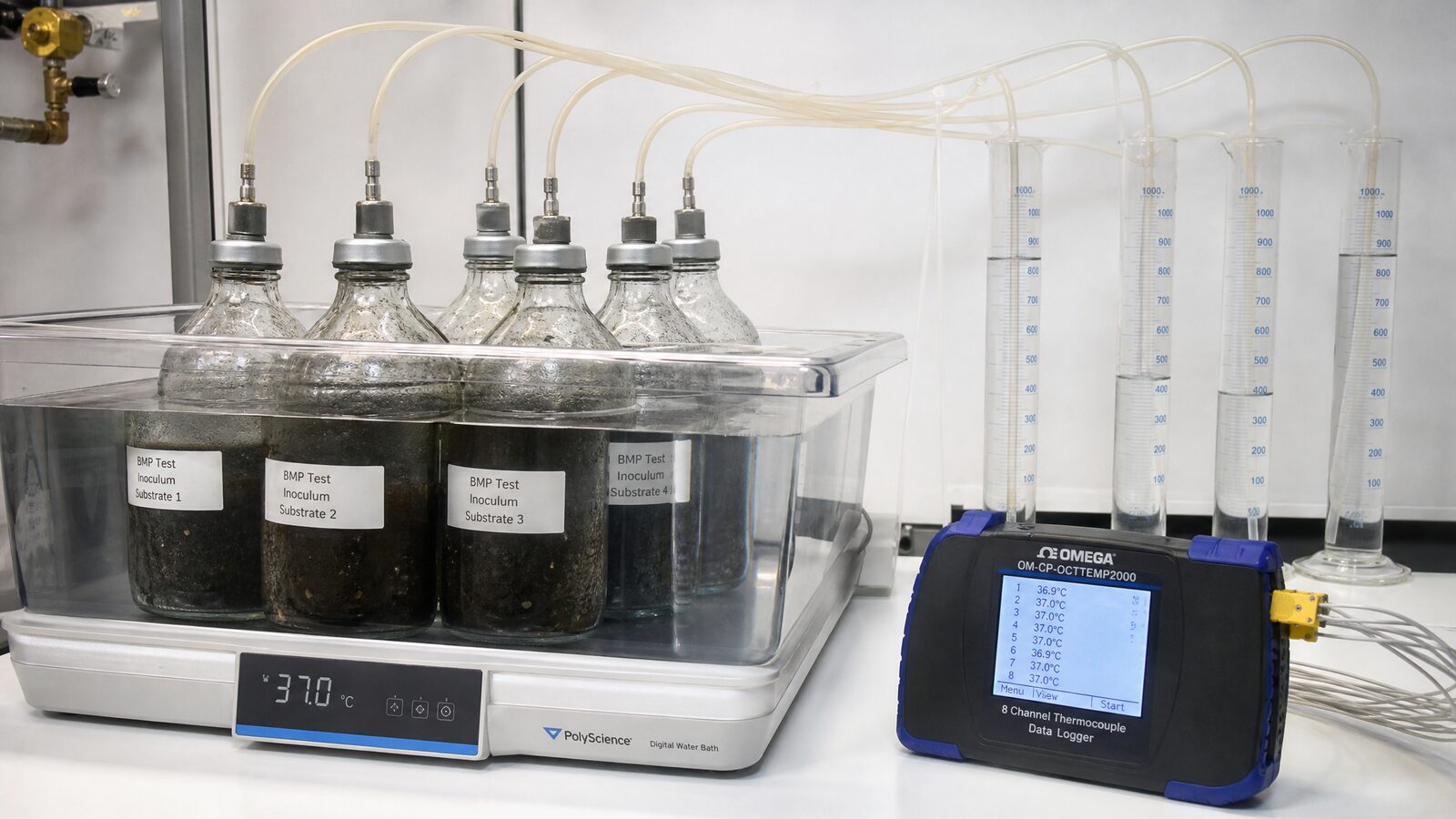
BMP remains highly useful for feedstock screening, contract evaluation, and blend optimisation, but it should not be treated as a production guarantee. Laboratory tests are usually performed under tightly controlled conditions with optimal inoculum, particle size, and mixing, none of which fully replicate a commercial digester receiving variable daily inputs. A practical operational tip is to compare site SMP against weighted feedstock BMP each month and investigate sustained deviations rather than isolated low-yield days.
Factors Affecting Degradation Kinetics
To optimise degradation rates, we must manage the biological environment within the tanks. Key considerations include:
Particle Size: Reducing the size of feedstocks increases the surface area available for microbial attack, accelerating the hydrolysis stage, often the rate-limiting step in AD. For food waste, macerators or grinders typically reduce material to <12mm. For agricultural residues, hammer mills or shredders may be required. Over-processing should still be avoided where it creates excessive parasitic load, releases rapidly fermentable compounds too quickly (risking acid spikes), or generates fine particles that increase foaming potential.
Organic Loading Rate (OLR): If the OLR is too high, the degradation process can "sour" as volatile fatty acids (VFAs) accumulate faster than methanogens can consume them. As broad guidance, many mesophilic CSTR plants operate around 2 to 4 kg VS/m³/day, while more robust systems with well-understood feedstocks may push to 4–5 kg VS/m³/day or occasionally higher. Thermophilic systems may tolerate higher loading rates but with reduced stability margins. Rapid step changes in loading are often more damaging than the absolute number.
Retention Time: There is a commercial trade-off between keeping material in the tank longer to maximise degradation and processing higher volumes to increase total gas output. Typical HRTs may range from 20 to 40 days in many wet food waste AD systems, with some agricultural or fibrous systems requiring 40 to 60+ days for effective degradation. The first-order kinetics of AD mean that the majority of easily degradable material is converted within the first 15–20 days, but recalcitrant fractions may continue to degrade slowly for much longer.
Temperature Stability: Even modest temperature swings of ±2–3°C can reduce methanogenic activity. The thermal mass of a large digester provides some buffering, but heating system reliability, insulation integrity, and heat exchanger performance must all be maintained. Thermophilic operation (50–55°C) accelerates degradation but requires tighter temperature control and more robust process monitoring.
Trace Elements and Micronutrients: Cobalt, nickel, selenium, molybdenum, iron, and tungsten are essential cofactors for the enzymes involved in methanogenesis. Many food waste feedstocks are naturally deficient in these elements, and supplementation programmes, carefully calibrated to avoid over-dosing, can significantly improve degradation efficiency and process stability.
Other critical variables include alkalinity, VFA profile, ammonia concentration, sulphide levels, and the presence of inhibitory compounds. A digester can appear acceptable on daily gas volume while biological stress is already developing in the background. For that reason, process monitoring should not rely on gas output alone.
A practical operational tip is to adjust loading in controlled increments and then observe pH, alkalinity ratio, gas composition, VFAs, and mixing behaviour over several residence cycles. If throughput is increased without corresponding monitoring, underperformance is often only recognised after digestate quality declines and SMP has already fallen.
AD Plant Design: Engineering for Efficiency
The physical AD plant design serves as the framework within which all biological processes occur. A poorly designed plant will suffer from operational bottlenecks, regardless of the quality of the feedstock or the skill of the operators. Conversely, well-designed infrastructure provides the operational flexibility needed to manage the inevitable variability of real-world feedstocks and market conditions.
Core Design Configurations
Most modern UK facilities utilise Continuously Stirred Tank Reactors (CSTR), but the specific design must be tailored to the feedstock profile. For example, high-solids feedstocks may require "dry" AD systems or plug-flow reactors, whereas liquid-based systems are better suited for traditional vertical tanks.
A CSTR offers strong flexibility where feedstock composition changes frequently. It supports blending, homogenisation, temperature control, and relatively uniform biological conditions throughout the vessel. This makes it well suited to mixed food waste, slurries, process liquors, and co-digestion strategies. The disadvantages are that mixing energy demand can be significant (typically 5–10 W/m³ of reactor volume), fibrous or floating layers may still form if mixer design is poor, and true retention time can be lower than nominal if short-circuiting occurs between inlet and outlet positions.
A plug-flow reactor is generally more suitable for thicker, stackable, or higher dry matter substrates (typically >15% TS) where material progresses through the digester in sequence rather than being fully mixed. This can improve handling of manures with bedding, energy crops, and some source-segregated organics where solids content is consistently higher. Benefits may include lower mixing intensity and potentially more predictable solids movement, but the drawbacks can include reduced flexibility with variable feedstocks, increased risk of channelling, and more complex feeding and discharge arrangements if contaminant levels are high.
Dry or solid-state AD systems (also called garage-type or tunnel digesters) operate at even higher dry matter content (25–40% TS), using a percolation-based approach where liquid is sprayed over stacked feedstock in enclosed bays. These are well suited to yard waste, energy crops, and agricultural residues but typically achieve lower methane yields per tonne than wet systems due to reduced mass transfer between microbes and substrates.
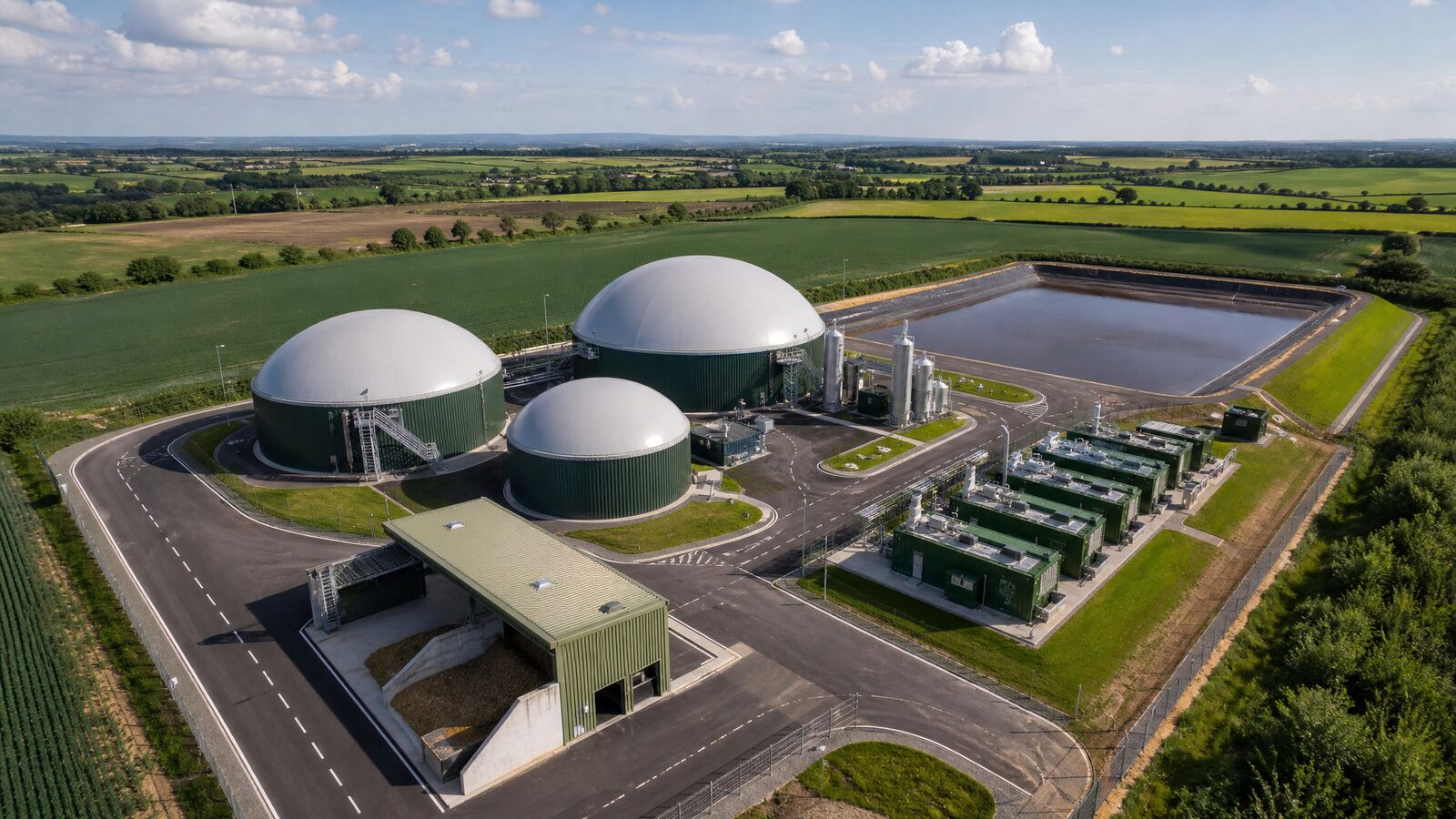
The correct selection depends on dry matter content, contaminant burden, desired throughput, target HRT, heating strategy, and the proportion of rapidly degradable versus fibrous material. A practical operational tip is to validate the reactor choice against the actual future feedstock envelope, not only the initial business plan feedstock, because many long-term performance issues begin when plants are forced to process materials outside their original design basis.
Key Engineering Considerations
When consulting on renewable energy strategy, we emphasise several design features:
Mixing Systems: Effective mixing prevents the formation of "dead zones" where material settles and ceases to degrade. It also ensures that heat and nutrients are distributed evenly and that fresh feedstock contacts active microbial populations. Mixer placement, power density, operating sequence, and duty cycles should be designed around rheology, solids content, and tank geometry rather than selected as generic equipment. Common options include mechanical paddle or propeller mixers (top or side-mounted), recirculation pumps, and gas-lift mixing systems, each with distinct advantages depending on tank size and feedstock type.
Heating and Insulation: Maintaining a stable mesophilic (approx. 35–42°C) or thermophilic (approx. 50–55°C) temperature is critical. Design must account for heat recovery systems to improve the plant's energy balance, typically recovering waste heat from CHP jacket water and exhaust gas via heat exchangers. Even relatively small and repeated temperature swings of 2–3°C can suppress methanogenic activity and reduce SMP. Floor insulation is frequently underspecified on farm-scale plants, leading to significant ground heat losses, particularly on exposed or wet sites.
Pre-treatment Infrastructure: For recalcitrant materials like straw, woody waste, or heavily packaged food waste, incorporating thermal, mechanical, or enzymatic pre-treatment into the design can significantly improve overall degradation rates. De-packaging systems are increasingly important for food waste plants receiving retail and manufacturing waste where packaging contamination is a constant challenge.
Hydraulic Retention Time and Active Volume: Nominal tank volume does not equal effective treatment volume. Pipework levels, foam layers, grit deposition, scum rafts, and internal structures can all reduce active capacity, sometimes by 10–20% or more on poorly maintained plants. HRT assumptions should therefore be conservative and checked against expected dilution and recirculation rates.
Organic Loading Resilience: Reactor volume and feed system design should allow the plant to absorb normal variation without frequent overloading. Designing close to the biological limit may improve paper economics but often reduces operational resilience and creates a plant that is intolerant of the inevitable variability in feedstock quality and quantity.
Access for Maintenance and Clean-Out: Digesters handling grit, plastics, sand, or fibrous material require realistic maintenance provisions, isolation points, and safe access for desilting or mixer intervention. Grit accumulation is one of the most common causes of effective volume loss and mixer damage on food waste plants, and design should include provisions for grit removal, ideally without requiring a full empty-out.
A practical operational tip is to commission for process stability, not only for mechanical completion. Many plants are technically complete but biologically vulnerable because mixer settings, heating control, feed sequencing, and recirculation rates were not optimised during the critical early weeks of biological start-up and load building.
Future-Proofing through Design
A robust design should also account for future expansion and changes in feedstock availability. We assist developers in ensuring that their site layouts allow for additional storage, gas upgrading equipment, carbon capture modules, digestate treatment infrastructure, or additional digester capacity as the market evolves. Sites designed with future-proofing in mind, including adequate space for additional equipment, oversized cable ducts and pipe runs, and flexible control system architecture, are significantly easier and cheaper to expand than those designed solely for day-one requirements.
Integrating Digestate, Degradation, and Design
The success of an AD facility is found at the intersection of these three "D"s. A plant with excellent design but poor understanding of degradation rates will struggle with stability and underperform commercially. Conversely, a plant that achieves high gas yields but fails to manage its digestate as a resource will face escalating disposal costs, loss of PAS 110 certification, and regulatory scrutiny.
The interconnections are practical and direct. Plant design determines the HRT and OLR that the biology can sustain, which in turn determines degradation efficiency and gas yield. The completeness of degradation affects both the volume and quality of digestate, poorly degraded material produces a higher volatile solids residue, increased odour potential, and potentially phytotoxic effects when applied to land. And digestate management strategy feeds back into design: the choice of separation technology, storage volume, and spreading infrastructure should be integral to the initial plant design rather than an afterthought.
At TIFT Services Ltd, we bring over 15 years of technical expertise to help you master these complexities. Whether you are in the planning stages of a new build or looking to revitalise an existing operation, our mission is to ensure your facility operates at peak efficiency while contributing to a sustainable future.
Please contact our team to discuss how we can support your AD site management and regulatory requirements. For more technical guides, please visit our insights page.